
South America is one of the most genuinely educational student travel destinations on earth — and one of the most consistently underused by school programs that default to Europe.
Amazon rainforest, Andean ruins, Galapagos wildlife, living indigenous cultures, and real Spanish immersion — these are experiences students talk about decades later. This guide covers everything needed to plan student trips to South America that actually deliver on that potential.
For more student travel resources, check our Travel Tips for Students homepage.
Why South America Works So Well for Students
The geographic range is genuinely hard to communicate in a guide — Amazon rainforest, Andes mountains, Pacific coastline, glaciers, wetlands, desert — all within one continent and often within one trip. A student who’s grown up in a flat suburban neighborhood has absolutely no reference point for this. It doesn’t just educate them — it recalibrates how they understand the physical world.
Language immersion works differently here than in any classroom. You’re not practicing Spanish — you’re using it because you have to. Menus, markets, local guides, asking for directions, buying food. Every interaction is a lesson. Indigenous languages like Quechua and Aymara add a layer of cultural depth that most programs don’t even attempt to offer anywhere else.
History here isn’t something you read about — it’s something you stand inside. Inca ruins you actually walk through. Colonial architecture still in daily use by real people. Communities where indigenous traditions haven’t been smoothed out or repackaged for tourist consumption. Students who struggle to connect with history in classrooms suddenly find themselves completely absorbed in it.
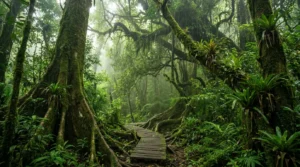
Environmental education has no better living classroom on earth. Full stop. Amazon basin, Galapagos Islands, Pantanal wetlands, cloud forests — these are the places climate science and biology classes reference constantly. Student trips to South America put students physically inside those references. The difference is significant and impossible to replicate in a classroom.
Service learning here is genuine — teaching in village schools, reforestation projects, health outreach in communities that genuinely need support. Not the kind of voluntourism where students show up, take photos, and leave feeling good about themselves without having actually helped anyone. Real involvement that changes how young people understand their own position and responsibility in the world. Established providers like WorldStrides and EASchoolTours run strong programs across South America — the infrastructure is there and it works.
Popular Destinations and Sample Itineraries
| Duration | Key Themes | Destination | Sample Activities |
|---|---|---|---|
| 8-12 days | Archaeology, ecology, Spanish immersion | Peru and Machu Picchu | Inca trail, Amazon lodges, Lake Titicaca |
| 10-14 days | Evolution, biodiversity, conservation | Ecuador and Galapagos | Wildlife viewing, Quito cultural tour, local markets |
| 10-14 days | Geology, glaciology, urban studies | Patagonia, Chile, Argentina | Buenos Aires, Iguazu Falls, Torres del Paine |
| 8-12 days | Ecology, climate change, rainforest | Brazil and Amazon | River cruises, Amazon wildlife, Rio urban studies |
| 12-20 days | Comparative studies, cross-ecosystem | Multi-country circuits | Contrasting ecosystems, cultures, histories |
For Ecuador and Galapagos specifically, our Ecuador and Galapagos Local Travel Tips covers the wildlife rules and conservation requirements every visitor needs to know
Destination Deep Dives
Peru and Machu Picchu keeps coming up as the most requested student route and honestly you understand why the moment you look at the itinerary — Lima, Cusco, Sacred Valley, Machu Picchu, then either Amazon or Lake Titicaca. Archaeology, ecology, indigenous culture, and real Spanish practice all within one trip. Teachers who have run Inca trail programs consistently report a shift in students that’s difficult to explain — something about the physical effort combined with the destination changes how they carry themselves for the rest of the program. Artisan workshops, Amazon lodge nights, Uros floating islands — this itinerary covers more genuine educational ground than almost anything else available.

Ecuador and the Galapagos is the obvious choice for biology and environmental science programs and it delivers every time. Historic Quito, local markets that feel genuinely local rather than tourist-facing, then Galapagos boat-based exploration — snorkeling, wildlife viewing, comparative island ecology. Darwin’s observations made complete sense in this specific place and students who visit feel that same moment of clicking understanding. There really is nowhere else like it.

Argentina and Chile covers Buenos Aires cultural immersion and social studies, Iguazu Falls and rainforest, Torres del Paine glaciers in Patagonia, Atacama Desert, Valparaiso. Geography, geology, and cultural contrast all within one program that manages to feel coherent rather than scattered.
Brazil and Amazon — Manaus, river cruises, jungle exploration, deforestation and biodiversity up close, Rio urban ecology. If your students have been studying climate change in classrooms, putting them physically inside the Amazon changes the conversation when they get back. That shift in understanding is worth the entire trip cost on its own.
Multi-country circuits combining Peru and Ecuador or Argentina, Chile, and Brazil allow direct comparison of ecosystems, cultures, and histories — ideal for interdisciplinary programs that want genuine range.
Making Trips Curriculum-Linked
The difference between a student trip that produces lasting outcomes and one that fades within weeks of returning comes down to one thing — whether learning objectives were built into the program from the start, not added as an afterthought.

The student trips to South America that actually work aren’t just travel — they’re built around specific learning objectives from the start. That’s the line between a genuinely educational program and an expensive school holiday that nobody quite knows how to justify.
History and Social Studies — Inca Empire, colonialism, independence movements, indigenous rights, contemporary politics. All of it comes alive when you’re physically present in the places where it happened rather than reading about it in a textbook. Language — Spanish or Portuguese immersion with daily real necessity rather than classroom exercises. Science — biodiversity, ecosystems, climate change, glacial science, evolutionary biology in actual living laboratories. Service — genuine volunteer work in schools, health clinics, conservation groups. Art and Culture — music, dance, crafts, storytelling. Interdisciplinary Projects — documentaries, environmental research, collaboration with local youth.
Pre-trip preparation through webinars, language training, and project work. Reflective activities throughout. Genuine classroom integration on return — not just moving on as if the trip was a separate thing that ended when the plane landed.
Health, Risk and Safety
Student trips to South America need proper risk management — not because the continent is uniquely dangerous but because proper preparation makes any international student program significantly safer and smoother. Programs that skip this step are the ones that run into problems.
Country and region risk analysis before committing to anything. Established local agencies rather than improvised logistics. 24/7 medical and travel support access throughout. Real contingency plans for flight delays, weather, and political situations — written down and actually communicated to everyone involved.
Health and vaccines — Yellow fever for Amazon regions, Typhoid, Hepatitis A/B, Tdap, routine immunizations. Altitude sickness for Andean routes needs specific preparation and catches more programs off guard than anything else. Medical packs and emergency medications travel with the group — not in checked luggage.
Safety on the ground — reliable pre-arranged transport, avoiding late travel in unfamiliar areas, local guides with real security awareness, maintained student-to-staff ratios, buddy systems, communication strategies that everyone understands before departure.
Insurance and permissions — comprehensive coverage including medical evacuation, parental consent, medical disclosures, duplicate documents. None of this is optional regardless of how smooth the program looks on paper.
For comprehensive travel safety preparation including insurance and health prep, our Travel Safety Tips guide covers everything to sort before departure.
Fundraising, Logistics and Budgeting
A typical 10-day student trip to South America runs USD 2,500-5,500 per student — international flights, internal transport, accommodation, meals, guides, entry fees, permits, insurance, visas, vaccinations, supplies. An 11-day Peru and Costa Rica combined program comes in around USD 4,695 as a concrete reference rather than a vague estimate.
Fundraising that actually produces results — crowdfunding with specific stories attached, local sponsor and foundation outreach, student craft and photo-book sales, education travel foundation grants. Bake sales and car washes contribute smaller amounts and work best combined with other strategies rather than relied on alone.
Timeline — 12-18 months out to confirm and select provider, 9-12 months for site visits and risk assessment, 6-9 months for flights and accommodation, 3-6 months for medical and visas, final month for orientation, post-trip classroom integration built into the plan from the beginning rather than added as an afterthought.
For a complete student packing guide, our Travel Packing Tips 2026 covers everything from carry-on strategy to destination-specific gear.
Student Experience Best Practices
Pre-departure orientation covering cultural norms, realistic language expectations, and what students will actually encounter — not a polished version that leaves them unprepared. Project-based learning with real fieldwork assignments and journaling. Mentor pairing with local guides. End-of-day reflection that processes what students actually experienced. Digital storytelling through photo essays and video logs. Peer exchange with local schools where programs allow it.
The trips that produce lasting outcomes treat students as active participants in a genuine learning process — not tourists being escorted through experiences from a safe distance.
Real Case Studies
WorldStrides Peru — students lived in an Andean village, participated in nutrition programs, engaged directly with cultural heritage. The results weren’t just nice travel memories — measurably higher cultural empathy, genuine confidence, cross-cultural connections that persisted well after the trip ended.
Educating Adventures Argentina and Chile — students visited Patagonian glaciers and Mapuche communities. Programs that include active fieldwork — glacier observation, Andean ecology, Mapuche community visits — consistently produce students who return with specific project ideas rooted in what they directly observed. That connection between experience and academic output is what separates properly planned student trips from expensive school holidays.
Tour Providers and Resources
- WorldStrides — Peru, Argentina, Chile
- EF Tours — Latin America focus
- Educating Adventures
- Explorica — Latin America tours
- Rustic Pathways — Peru and Ecuador study programs
Worth checking before finalizing anything — U.S. State Department travel warnings for current conditions, education travel insurance providers, and local NGO networks in destination countries.
Frequently Asked Questions
Q1: How safe are student trips to South America?
Vetted providers, proper health preparation, comprehensive insurance, reliable transport, and local expertise make most properly planned programs genuinely safe. Improvised programs are a different story.
Q2: What’s the best South American destination for students?
Depends entirely on learning objectives — Peru and Ecuador for archaeology, ecology, and language; Argentina and Chile for geography, glaciers, and culture; Brazil and Amazon for biodiversity and climate science.
Q3: What does a 10-day student trip cost?
USD 2,500-5,500 per student covering flights, transport, lodging, meals, and guide fees.
Q4: How should students prepare before the trip?
Basic Spanish or Portuguese, cultural and historical background reading, vaccinations, altitude preparation for Andean routes, and pre-trip project modules that connect the experience to classroom learning before departure.
Q5: Can trips include volunteer or service elements?
Yes — most programs incorporate ethical community service including teaching, reforestation, and health outreach that goes beyond observation into genuine involvement.
Q6: When should planning begin?
12-18 months in advance for a properly organized student program.
Q7: What are the most common pitfalls?
Altitude sickness, weather delays, logistical complications, language barriers, cultural misunderstandings — all significantly reduced through proper planning, orientation, and local support.

Awamar Chheena is the founder of Travel Tips for Students. He writes practical guides to help students find travel deals, student discounts, and budget-friendly tips. His goal is to make travel more affordable for students around the world.