
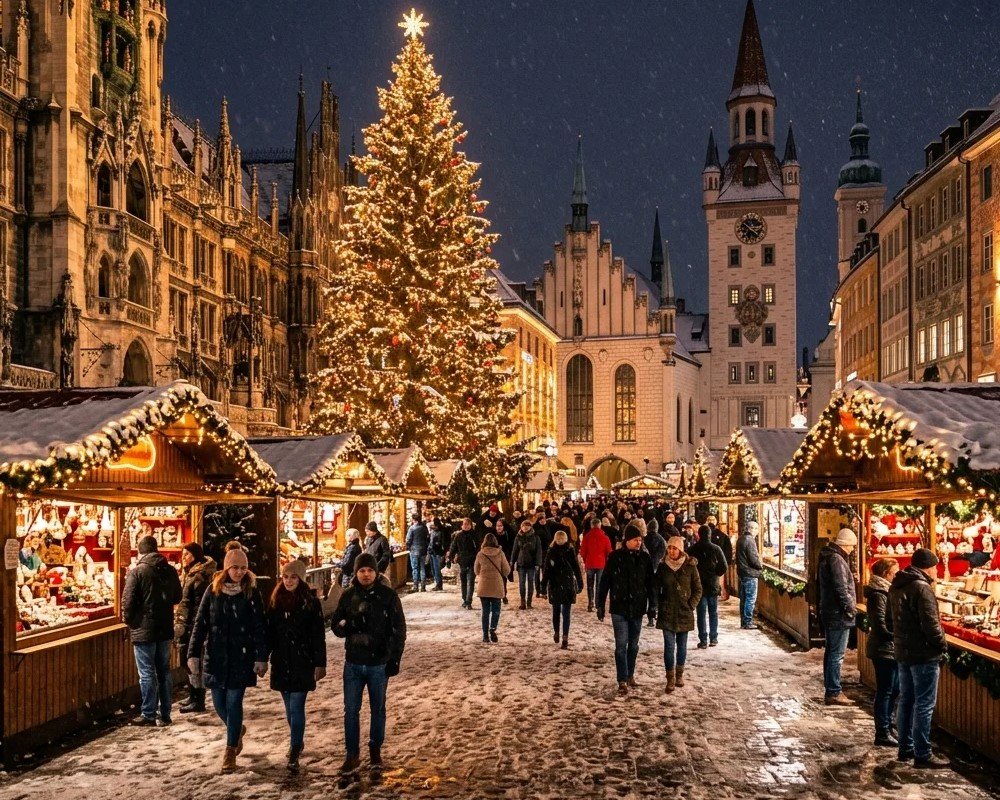
Planning a Europe winter trip as a student in 2026 means lower prices, smaller crowds, and experiences that simply do not exist in summer — Christmas markets, Northern Lights, ski slopes, and cities that feel genuinely local rather than tourist-overrun. This itinerary covers 10–14 days across the best winter destinations in Europe, with practical routes, budget tips, and everything you need to plan it properly. For safety preparation before any European trip, check our Travel Safety Tips guide.
Why Travel Europe in Winter?
December through February is genuinely one of the best times to visit Europe — and one of the most underrated by student travelers. Christmas markets run from late November through December across Austria, Germany, and the Czech Republic, with fairy lights, mulled wine, and traditional crafts that turn central European cities into something worth seeing. January and February bring cheaper flights, lower accommodation costs, and significantly smaller crowds at major attractions. Northern Lights viewing in Iceland, Norway, and Finland peaks during these months. Thermal spas in Budapest, carnival season in Venice, and winter hiking in the Alps are all experiences that either don’t exist or don’t work in summer.
For official destination information and event calendars, VisitEurope.com is the most comprehensive starting point.
Ideal Duration & Budget Tips
A 10–14 day trip covers three to four regions comfortably without rushing. Budget range varies significantly by region — Southern Europe (Portugal, Italy, Malta) runs roughly €50–80 per day for a student budget including accommodation, food, and local transport. Northern Europe and Alpine destinations (Iceland, Norway, Switzerland) run €100–200 per day minimum.
The most effective cost-saving strategies for winter Europe are booking low-cost carriers like Ryanair or EasyJet for inter-European hops, using overnight trains or buses to save a night’s accommodation, and traveling with a Eurail Pass for multi-country rail routes. Travel insurance is non-negotiable for winter Europe — weather disruptions, delays, and cancelled connections happen regularly in January and February.
Europe Winter Tour (10-14 days) Guide
Day 1-3: Central Europe (Vienna and Prague)
Vienna is the natural starting point for a winter Europe itinerary — the Christmas markets around the Rathaus and Schönbrunn Palace run through late December, and the city’s coffeehouse culture is genuinely worth experiencing slowly.
Prague connects by a scenic four-hour train ride and offers a medieval old town, Charles Bridge, and some of the most affordable food and accommodation in Central Europe. Both cities work well in winter because their appeal is architectural and cultural rather than outdoor-dependent. Check train schedules and book in advance at OBB Rail.

Day 4-6: Alpine Adventures (Switzerland and Austria)
Innsbruck gives access to ski slopes within 20 minutes of the city center — one of the most accessible ski setups in Europe for students without dedicated ski trip planning. Lucerne and Interlaken in Switzerland offer lake scenery, mountain trains, and access to the Jungfrau region. The Swiss Travel Pass covers trains, buses, and many cable cars — worth calculating against individual ticket costs for a three-day stay. Current snow conditions and ski pass pricing at MySwitzerland.com.

Day 7-10: Northern Lights / Nordic Magic
Reykjavik is the most accessible Northern Lights base for students — the Golden Circle day trip, Blue Lagoon, and organized Northern Lights tours all operate through December and February. The lights require clear skies and darkness, so flexibility in your schedule matters — booking two to three nights gives you the best chance of a clear evening.
Tromsø in Norway offers dog sledding, Sami cultural experiences, and arguably the most reliable Northern Lights viewing in Europe. Book Northern Lights tours at least a week in advance during peak season. Full Iceland travel planning at Visit Iceland.

Additional (Day 11-14): Southern Europe Coziness
Lisbon runs 12–15°C in winter — warm enough for exploring on foot without heavy gear, and dramatically cheaper than summer. The city’s tram network, viewpoints, and neighbourhood food scene are all better experienced outside the August crowds. Rome in January and February means the Colosseum and Vatican with minimal queues — genuinely one of the best times to visit Italy’s major sites.
Malta offers Mediterranean warmth, Baroque architecture, and some of the clearest water in Europe even in winter. Official Rome event listings at Visit Rome.
Best Winter Festival and Markets
-
Vienna Christmas Market – Ice skating and traditional stands.
-
Striezelmarkt (Germany) – Oldest Christmas market in the world.
-
Bellamie (Carnival of Venice Italy) – February masquerades and processions.
-
The Viking fire festival of January in Up Helly Aa (Scotland)
Practical Travel Tips
Clothing for winter Europe varies significantly by region — Central and Northern Europe requires thermal base layers, waterproof boots, gloves, and a proper insulated jacket. Southern Europe (Lisbon, Rome, Malta) needs light layers and a rain jacket but nothing heavy. Pack versatile rather than destination-specific — layers that work across temperature ranges rather than separate wardrobes for each region.
For a complete student packing list for winter travel, our Travel Packing Tips 2026 guide covers everything. Multi-country rail travel is most efficiently booked through Eurail — winter passes are available at student pricing.
Comparison Table: Northern and Southern Europe during Winter
| Characteristics | Northern Europe (Iceland/Norway) | Southern Europe (Italy/Portugal/Malta) |
|---|---|---|
| Weather | Snowy, very cold (-5°C to -20°C) | Mild, 8°C to 15°C |
| Activities | Northern lights, skiing, snow tours | Sightseeing, cultural tours, coastal walks |
| Budget | More expensive (Norway/Iceland expensive) | Less expensive (Portugal/Italy affordable) |
| Crowds | Low | Medium (locals travel in winter) |
Europe Winter Travel on a Student Budget Winter is genuinely the best season for student travel in Europe — prices drop, crowds thin, and the experiences available are ones that summer tourists miss entirely. A 10-day Central and Southern Europe trip combining Prague, Vienna, and Lisbon runs approximately €800–1,100 all-in for a student on a careful budget, including flights from the US or UK.
Interrail and Eurail both offer student-specific pricing worth comparing before booking individual train tickets. Student hostels in Prague and Lisbon specifically are among the best value in Europe — social, central, and genuinely good quality. Book accommodation at least three to four weeks ahead for the December Christmas market period when central European cities fill up faster than at any other time of year.
Types of Accommodation Recommended
-
Budget Travelers: Guesthouses, Airbnb shared rooms, hostels.
-
Mid-range: Boutique hotels, inns, ski chalets.
-
Luxury: 5-star spa resorts, mountain lodges, historic palaces.
Correlated: The Ultimate Student Travel Packing Guide
Europe Winter Travel Itinerary Frequently Asked Questions
Q1. When is the most suitable month to visit Europe during winter?
-
Christmas markets in December, skiing and less crowds in January-February.
Q2. Is it costly to travel to Europe in the winter?
-
Less expensive than in the summer, unless it is ski resorts and Scandinavia.
Q3. Am I able to see the Northern lights in Europe?
-
Yes, Iceland, Norway, Finland, and Sweden are the best ones.
Q4. What about travelling in between cities?
-
Short-distance trains, long-distance low fare flights.
Q5. Should I intend to take travel insurance during winter in Europe?
-
Yes, particularly when snowing and other weather inconveniences.
Q6. What are the things I should carry during winter traveling?
-
Thermal, insulated boots, gloves, waterproof jacket and power bank.
Q7. Does it get warm in the winter in the Southern Europe?
-
Yes, there will be 10-15°C in Lisbon, Rome, and Malta.

Awamar Chheena is the founder of Travel Tips for Students. He writes practical guides to help students find travel deals, student discounts, and budget-friendly tips. His goal is to make travel more affordable for students around the world.