

Booking a guided tour should make your trip easier and safer. But sometimes, especially for students traveling on a budget, the experience turns disappointing — or even scam-like.
Recognizing tour guide scam signs early can save your money, protect your safety, and prevent your entire trip from being ruined.
In this guide, you’ll learn:
-
The most common tour guide scam signs
-
How to get a bad tour guide refund
-
When to report a tourist guide scam
-
How students can recover quickly
Before booking any experience abroad, make sure you understand essential travel safety tips for students
Why Tour Guide Scam Signs Matter for Student Travelers
Student travelers face a specific set of vulnerabilities that make tour guide scams more likely to succeed. Tight budgets mean less room to recover financially from a bad experience. Limited travel experience makes it harder to recognize when something is off. And the pressure to make the most of a short trip window — spring break, summer, a semester abroad — means students are more likely to book quickly without doing enough research. Understanding tour guide scam signs is not paranoia — it is the preparation that prevents a single bad booking from derailing an entire trip.
This risk increases during independent trips. If you’re planning one, review our full guide on solo travel tips for students
Common Tour Guide Scam Signs to Watch Before Booking

1. No Verified Reviews
Check reviews on at least three separate platforms — Google, TripAdvisor, and Viator — before booking any guide. A legitimate guide with real experience will have consistent reviews across platforms, not just one source. Watch for reviews that are all posted within a short time window, use very similar language, or have no specific details about the actual tour experience — these patterns indicate fake reviews. One negative review among many positives is normal. A pattern of similar complaints about the same issue is a serious warning sign.
You can cross-check destination credibility using trusted travel publishers like Lonely Planet travel guides.
2. Hidden Fees or Unclear Itinerary
If pricing details are unclear or constantly changing, it’s a warning sign.
Transparent guides clearly explain:
-
Entry fees
-
Transport costs
-
Optional activities
A professional tour guide provides a complete written itinerary with all costs clearly listed before you pay anything. This includes entry fees to sites, transport costs between locations, and any optional add-ons. If a guide gives you a verbal-only quote, asks for cash only, or adds costs that were not mentioned during booking — these are red flags. Ask for everything in writing before confirming payment. If they refuse, walk away.
3. Pressure to Book Immediately
Scammers create urgency:
“Only 2 spots left!”
Legitimate guides allow time for questions.
Legitimate tour operators understand that travelers need time to compare options, read reviews, and make informed decisions. Any guide or agency that tells you a deal expires in the next hour, that spots are almost gone, or that the price will increase if you do not book immediately is using pressure tactics. These tactics are specifically designed to prevent you from doing the research that would reveal problems. Take the time you need — a good guide will still be available tomorrow.
Many students fall into similar traps — especially during their first trip abroad. Avoid common booking errors by learning from these common travel mistakes students make
Tour Guide Scam Signs During the Tour
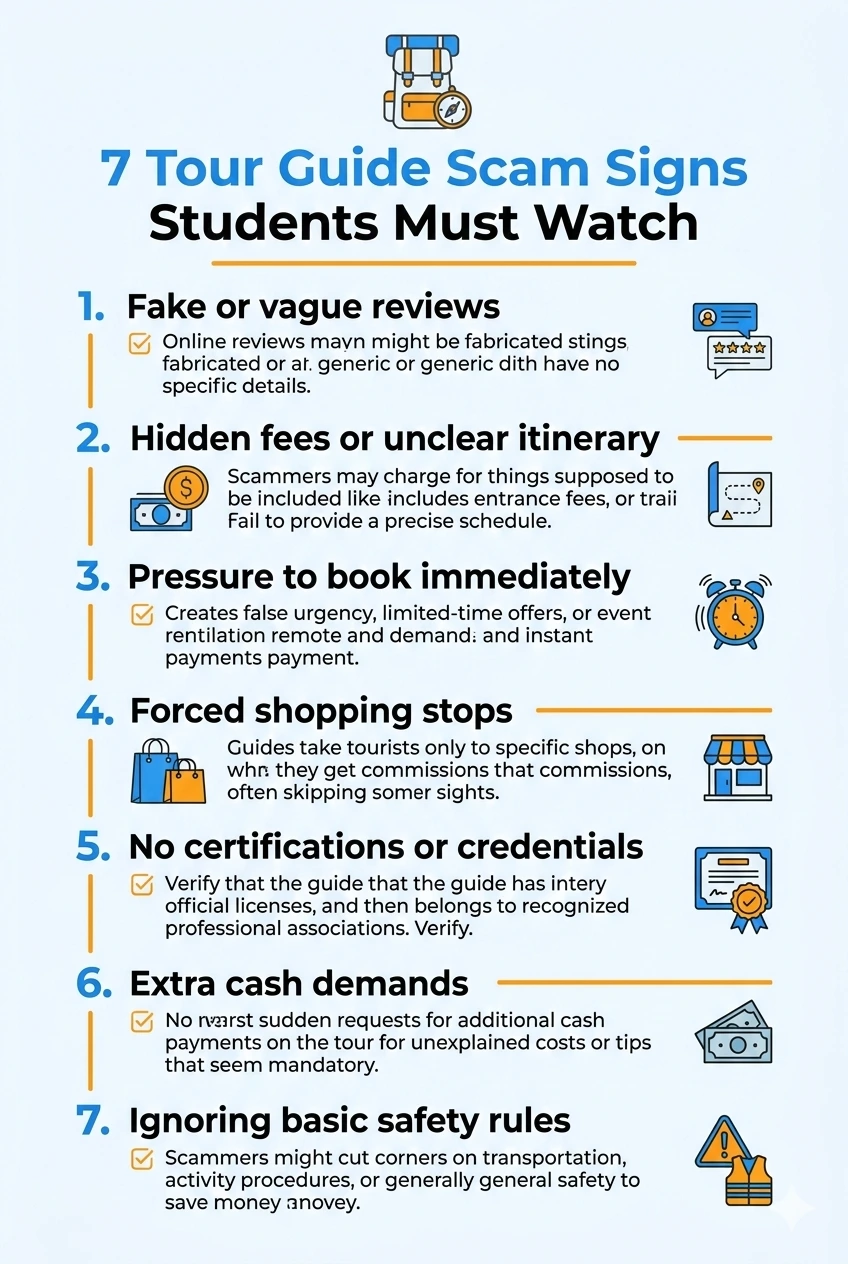
Sometimes you only notice issues after it begins.
Watch for:
-
Guide pushing specific souvenir shops
-
Constant schedule changes without explanation
-
No historical or cultural context
-
Asking for extra cash payments
-
Ignoring basic safety procedures
If multiple tour guide scam signs appear, act early.
What to Do If You Hired the Wrong Guide
If you realize the guide is unprofessional or dishonest:
Step 1: Clarify Immediately
Ask:
-
Why is the itinerary different?
-
Are extra charges included?
-
What was originally promised?
Sometimes miscommunication can be resolved calmly.
Keep your tone calm and factual rather than confrontational. Some situations genuinely are miscommunication rather than deliberate scamming, and a direct conversation resolves them faster than escalating immediately. If the guide responds reasonably and adjusts, the situation may be salvageable. If they become defensive or dismissive, move to Step 2.
Step 2: Contact the Booking Platform
Message the agency immediately and request:
-
A guide replacement
-
A partial refund
-
Written clarification
Message through the official platform app or email so everything is documented automatically. Take screenshots of your original booking confirmation, any messages with the guide, and your current location if relevant. Most platforms have a dispute resolution process — use it formally rather than just leaving a review.
Budget-conscious students can also check StudentUniverse travel advice for tips on safe and affordable student travel.
Step 3: Leave If Necessary
If the situation feels unsafe:
-
Leave calmly
-
Save screenshots
-
Keep payment receipts
-
Take photos if relevant
Move to a populated public area immediately and contact your accommodation. Notify a trusted person of your location. Save all receipts, screenshots, and any photos that document what happened. Report to the platform within 24 hours while everything is fresh and evidence is intact. Your safety always takes priority over any money already spent.
Can You Get a Refund From a Bad Tour Guide?
Yes — especially if:
-
The itinerary was misrepresented
-
Hidden fees were added
-
Safety standards were ignored
To maximize your chance of a successful refund claim, document everything as it happens rather than trying to reconstruct it afterward. Contact the platform support within 24 hours — most platforms have strict time limits on dispute windows. Platforms like Viator and GetYourGuide have structured dispute processes specifically for situations where the delivered experience did not match what was booked.
For international travel standards and expectations, you can also review guidance from Rick Steves’ travel advice to understand what professional tours typically include.
Smart Backup Plan for Students
Even if you leave a bad tour, your trip isn’t ruined.
Better alternatives include:
-
Free walking tours
-
Hostel-organized group tours
-
University city tours
-
Self-guided exploration
If you’re planning structured international travel, preparation becomes even more important. Review this student trips abroad planning guide
Flexibility protects your experience.
Quick Student Checklist Before Booking Any Guide
Before confirming payment:
-
Are reviews verified?
-
Is pricing fully transparent?
-
Is there a refund policy?
-
Does the guide explain safety measures?
-
Do you feel pressured?
If something feels unclear — don’t book.
Recognizing tour guide scam signs early is easier than fixing problems later.
FAQs About Tour Guide Scam Signs
Q1: Are all bad guides scams?
No. Some are inexperienced, not fraudulent. But repeated red flags indicate risk.
Q2: Can I leave mid-tour?
Yes. Your safety and comfort come first.
Q3: How do I avoid tourist guide scams in 2026?
Research reviews deeply, avoid unrealistic deals, and understand refund policies.
Q4: Are free walking tours safe?
Yes, if they are licensed and well-reviewed.
Q5: How do I find a legitimate tour guide abroad?
Book through verified platforms like Viator, GetYourGuide, or your accommodation’s front desk recommendations. Check that the guide has consistent cross-platform reviews and provides a clear written itinerary with transparent pricing before you confirm.
Q6: What should I do if a tour guide takes me somewhere I did not agree to?
Stay calm, do not follow into isolated areas, and leave as soon as it is safe. Contact your accommodation immediately, document the deviation with photos or screenshots, and report to the booking platform within 24 hours.
Q7: How much should a student budget for a guided tour?
Legitimate guided tours range from free tip-based walking tours to $30–80 per person for half-day tours. Full-day tours with transport and entry fees typically run $50–150. Anything significantly below market rate should be researched carefully before booking.

Awamar Chheena is the founder of Travel Tips for Students. He writes practical guides to help students find travel deals, student discounts, and budget-friendly tips. His goal is to make travel more affordable for students around the world.
