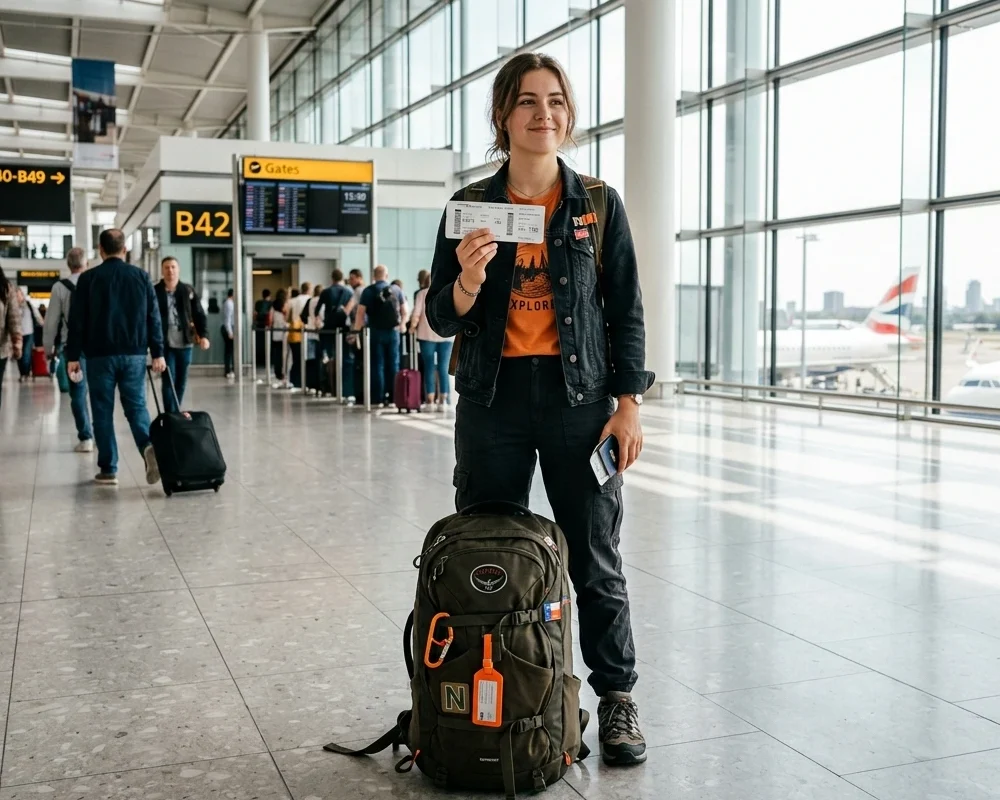
Alright, travel is genuinely one of the best things you can do — but safety is what makes the adventure actually enjoyable rather than something you’re still recovering from months later. Whether it’s finding a good place to stay, keeping your stuff secure, or knowing what to do when something goes wrong, this guide covers everything. Real travel safety tips, actual case studies, practical tools, and the precautions that make a difference in real situations. For more student-oriented travel guides, head over to our main hub at Travel Tips for Students.
Why Travel Safety Actually Matters
Most people think about travel safety in vague terms — “be careful,” “stay aware” — without knowing what that actually means in practice. The travelers who consistently avoid problems aren’t necessarily more experienced or more cautious. They’re just better prepared. They know which precautions to take before they leave, how to handle situations when they come up, and how to recover when things go sideways.
Traveling is a huge part of student life but even experienced travelers get caught out. Petty theft, sudden illness, scams, getting genuinely lost — being prepared saves an enormous amount of stress and money. Students who plan ahead are significantly less likely to run into serious problems abroad — not because bad things don’t happen to prepared travelers, but because prepared travelers know how to handle them when they do.
Pre-Trip Travel Safety Tips
As a student traveler, you’re often working with tighter budgets and less travel experience than older tourists — which makes preparation even more important, not less.
The best travel safety decisions are made before you ever leave home. Most problems that happen during trips could have been prevented or significantly reduced with the right preparation.
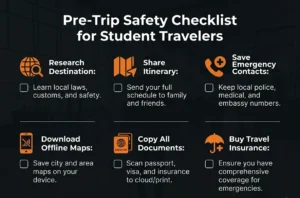
Research Your Destination Thoroughly Before anything else — understand where you’re actually going. Current travel advisories, recent safety news, local crime patterns in tourist areas, weather conditions during your travel window. This isn’t about making you paranoid, it’s about going in with accurate expectations. For safer travel routes across Europe specifically, our Europe Winter Travel Itinerary covers routes, destinations, and seasonal safety tips in detail.
Share Your Itinerary Tell at least one trusted person at home where you’re going, where you’re staying, and your general daily plans. Not your entire social media following — one specific person who would know to contact someone if you went quiet unexpectedly. Update them when plans change significantly. This one step has made a real difference in situations where travelers needed help and nobody knew where to look.
Set Up Emergency Contacts Save local emergency numbers for every country you’re visiting — they vary significantly between countries and looking them up during an actual emergency is not how you want to be spending that time. Embassy contacts for your home country, local police, and the nearest hospital should all be saved offline rather than relying on internet access to find them when you need them.
Download the Right Apps Before You Go Navigation apps with offline maps downloaded before departure. Language translation apps for destinations where English isn’t widely spoken. Safety alert apps that notify you of threats in your area. Do all of this before you leave home, not when you’re trying to figure out the local metro system on arrival day. For a complete guide to the best travel apps across every category, our Best Travel Apps for Students 2026 covers everything worth downloading.
Document Everything Digital and physical copies of your passport, visa, travel insurance, flight confirmations, and accommodation bookings — stored separately from each other and from originals. Cloud storage means these are accessible from any device anywhere if originals are lost or stolen. This is the preparation step most people skip and most regret skipping when they actually need it.
Safe Accommodation
Your accommodation choice affects your safety more than most travelers realize — a poorly located or poorly secured place creates risks that follow you through the entire trip.
Location Matters More Than Price Stay in busy, well-lit areas — especially your first night somewhere new when you’re most disoriented and jet-lagged. Central areas near public transport keep you connected without needing to navigate unfamiliar areas late at night. The money saved by staying somewhere cheaper on the outskirts often costs more in transport, stress, and safety risk than the saving was worth.
Check Recent Reviews Specifically for Safety Read reviews from the past month specifically, looking for mentions of neighborhood safety, building security, and staff responsiveness. A highly-rated place from two years ago may have changed significantly. Recent negative safety mentions in reviews are a serious signal worth paying attention to.
Security Features Worth Prioritizing Electronic door locks. 24-hour reception that’s actually staffed. In-room safes for passports and valuables when you’re out exploring. Good lighting in corridors and entrances. These aren’t luxury requests — they’re basic security features that matter in practice.
For accommodation that combines comfort, security, and a genuinely enjoyable atmosphere, our Hygge Travel Experiences guide covers the philosophy of choosing places to stay that actually enhance your trip.
Transportation Travel Safety Tips
How you move between places is one of the highest-risk parts of any trip — and one of the most controllable with the right habits.
Airport and Transit Security Never let your luggage out of direct sight in airports and transit stations — bag theft in busy transit areas is one of the most common travel crimes globally. TSA-approved locks for checked luggage. Keep your most important items — passport, phone, cash — in a bag that stays on your body, not in overhead storage that can disappear while you’re distracted.
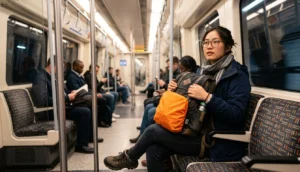
Public Transport Safety Avoid isolated or empty carriages especially late at night. Bags in front of you or on your lap rather than on the floor or in overhead racks where you can’t see them. Be particularly alert in crowded metro stations and buses where pickpocketing is most common — it happens fast and you often don’t notice until it’s done.
Rideshares and Taxis Official ride-hailing apps over unregistered street taxis wherever they’re available — you have a record of the journey, the driver is accountable to the platform, and pricing is fixed before you get in. Verify the driver’s name, photo, and vehicle details before entering. Share your ride details with someone for longer or late-night journeys. For budget air travel, booking through verified platforms and checking airline safety records keeps costs low without compromising on security.
Driving Abroad Research local traffic laws before renting — violations can be expensive or legally serious depending on the destination. International driving license where required. Avoid driving in unfamiliar areas at night, particularly where road quality or lighting is inconsistent. GPS downloaded offline in case signal drops at the wrong moment.
Personal Safety While Traveling
Stay Present and Aware Phone down in crowded areas — it’s repeated advice for a reason. Being visibly distracted marks you as an easy target in a way attentive travelers simply aren’t. Being visibly distracted marks you as an easy target in a way that attentive travelers simply aren’t. Most travel theft happens to people who are scrolling, navigating, or taking photos without paying attention to what’s immediately around them. Not paranoia, just presence.

Don’t Flash Expensive Items Expensive cameras, visible jewelry, luxury bags in tourist-heavy areas — these send a signal you don’t want to send. Anti-theft bag with hidden zippers when you’re somewhere crowded. Major tourist landmarks are specifically where pickpockets operate because they know visitors are distracted and usually carrying more than usual. Don’t make their job easy.
Trust Your Instincts If something feels off about a person, a place, or a situation — leave. You don’t need certainty to act on a feeling that something isn’t right. Instincts are processing environmental information faster than your conscious mind and they’re usually ahead of you for good reason. The cost of acting on a false alarm is walking away unnecessarily. The cost of ignoring a real one is significantly higher.
Travel With Someone When Possible Unfamiliar areas after dark, wherever possible, with someone else. If you’re solo, regular check-ins with someone at home who knows your general whereabouts. If a guide or tour operator situation goes sideways, our What to Do When You Hire the Wrong Tour Guide covers exactly how to handle it.
Health and Hygiene Travel Safety Tips
Vaccinations Six to eight weeks before departure — not the week before, not the day before. Some vaccines need multiple doses spaced weeks apart to actually work. Figure out what your destination requires and recommends well in advance. For official vaccination and health guidance specific to your destination, check WHO Travel Health Advice.
Sanitation and Water Safety Hand sanitizer for situations where proper handwashing isn’t possible. Bottled or filtered water in destinations where tap water quality is questionable — getting seriously ill from water somewhere remote is genuinely one of the most disruptive and potentially dangerous travel situations you can end up in.
Travel First Aid Kit Personal medications with enough for the full trip plus a few extra days. Basic pain relief, rehydration sachets, anti-diarrhea medication, plasters, any prescription medications clearly labeled in original packaging. This kit has genuinely saved more trips than any other single item you can pack — the one time you need it you’ll be extremely glad it’s there.
Stay Hydrated This one gets ignored constantly and causes more rough travel days than almost anything else. Hot and humid climates are particularly deceptive — you often don’t feel thirsty until you’re already significantly dehydrated. Drink water consistently throughout the day before you feel like you need it, not after.
Digital and Online Travel Safety
Public Wi-Fi Never use public Wi-Fi for anything sensitive — banking, email, any account with personal information — without a VPN active first. Airports, cafes, and hostels are targeted specifically because travelers use them constantly and most don’t think about what they’re exposing. A VPN subscription costs almost nothing and covers you everywhere.
Password Security Strong unique passwords for everything important, two-factor authentication on any account worth protecting. Don’t log into sensitive accounts on shared or public computers. If you use a hostel computer for anything at all, log out completely and clear the browser history before walking away from it.
Students especially tend to rely on hostel Wi-Fi for everything from banking to emailing professors — a VPN makes all of that safe rather than risky
Travel Insurance — Non-Negotiable
Good travel insurance covers medical emergencies and hospitalization, medical evacuation when local facilities aren’t adequate, trip cancellations and interruptions, and lost or stolen luggage. Buy it before departure — when you book your flights is the right time. Trying to get covered after something has already happened is how people discover that insurance doesn’t work retroactively. One medical evacuation without coverage can cost more than every trip you’ve ever taken combined.
Student travel insurance plans from providers like World Nomads or Insure My Trip are specifically designed for budget travelers and often cost under $50 for a two-week trip
Solo Travel Safety Tips
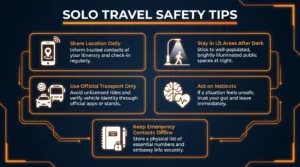
Location Sharing Daily check-ins with someone at home who knows where you are — prevents situations where nobody knows something has gone wrong. Life360 and similar apps make this simple and non-intrusive. Set it up before you leave, not when you’re already somewhere and realize you should have.
Stay Visible Well-lit, populated areas after dark until you genuinely understand the local geography. Isolated spots are risky for solo travelers in a specific way they aren’t for groups — if something goes wrong there’s nobody immediately nearby to help or even notice.
Act on Your Instincts Solo travelers need to act on uncomfortable feelings more decisively than group travelers because there’s nobody else to consult or reality-check with. If something feels wrong, that’s enough. For the most complete solo travel resource available, our Solo Travel Tips 2026 Guide covers everything.
Local Laws and Cultural Awareness
Respecting local culture isn’t just about being polite — it’s directly connected to your safety in ways people don’t always think about until something goes wrong.
What’s perfectly legal at home may be heavily regulated or outright illegal at your destination. Photography restrictions at certain sites, dress codes at religious locations, alcohol laws that differ significantly from your home country, drug regulations that carry serious penalties — getting on the wrong side of local law enforcement in an unfamiliar country is a genuinely serious situation. Research destination-specific legal considerations before you arrive, not after you’ve already done something.
Dress appropriately for the local cultural context. Understanding tipping norms, greeting customs, and general social etiquette makes every interaction go more smoothly and reduces the chance of standing out in ways you don’t want to. Listen to locals for current, specific knowledge — their information about which areas to avoid and which situations to be careful about is more current and more specific than anything any travel guide can provide.
Packing Smart for Safety
Anti-Theft Gear Anti-theft backpack with hidden zippers and slash-resistant material for crowded tourist areas — the design makes quick theft attempts fail rather than succeed. Money belt worn under clothing for passport and emergency cash — harder to access, which is the entire point. RFID-blocking wallet to prevent contactless card skimming — a real and growing threat in heavily touristed areas.
Pack Light for Mobility Overpacking reduces your ability to move quickly and confidently when situations require it. A heavy overstuffed bag marks you as a tourist, slows you down in transit, and makes navigating crowded areas significantly harder than it needs to be. Pack what you genuinely need and nothing else.
Safety Gadgets Worth Considering
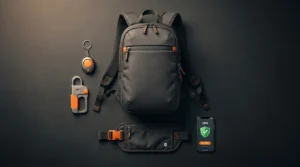
| Tool | Purpose | Price Range | Expert Tip |
|---|---|---|---|
| Anti-theft backpack | Prevents theft | $50-$120 | Choose one with RFID blocking and hidden zippers |
| Portable door lock | Hotel and Airbnb security | $15-$30 | Easy to install, works on most door types |
| Personal alarm | Emergency attention | $10-$25 | Loud siren gets immediate attention |
| Travel money belt | Secure cash and passport | $20-$40 | Wear under clothing, not on top |
| VPN subscription | Cybersecurity | $5-$15/month | Always connect before using public Wi-Fi |
Real Case Studies
These documented traveler scenarios show exactly why preparation matters — and what the difference looks like in practice.
Pickpocketing in Paris A tourist with a standard backpack lost their wallet and phone in a crowded metro station. A traveler in the same station with an anti-theft bag with hidden zippers lost nothing — the attempt was made and failed because the bag design made quick access impossible. The difference was a $70 purchase made before the trip.
Solo Traveler Alert in Thailand A solo traveler shared their ride details through an official app before getting into a vehicle that felt slightly off. When the route deviated, their contact at home was able to verify the situation and contact local emergency services. The location sharing that took five seconds to set up became genuinely critical.
Medical Emergency in Peru A student traveler developed altitude sickness in Cusco without adequate travel insurance. Evacuation to appropriate medical care cost significantly more than the entire trip had cost. A traveler in the same situation with comprehensive insurance including evacuation coverage had the same medical outcome but zero financial crisis attached to it.
Travel Safety Tips FAQ
What are the most important travel safety tips for new travelers?
Research your destination thoroughly, share your itinerary with someone at home, buy travel insurance before departure, keep document copies in cloud storage, and trust your instincts about people and situations. These five things prevent the majority of serious travel problems.
How do I keep my belongings safe while traveling?
Anti-theft bag with hidden zippers for daily use. Money belt under clothing for passport and emergency cash. Valuables in the hotel safe when you’re out. Nothing irreplaceable in checked luggage. Offline copies of everything important stored separately from originals.
Are solo travelers more vulnerable?
Different risks, not necessarily more risk overall. Share your location regularly, stay in well-lit populated areas after dark, and trust your instincts more decisively because there’s nobody else to consult in the moment.
What health precautions are required for international travel?
Vaccinations sorted at least six to eight weeks before departure. Basic first aid kit with personal medications. Safe water — bottled or filtered where tap water is questionable. Travel insurance with medical coverage non-negotiable.
Do I really need travel insurance?
Yes — without exception. One medical incident or evacuation without coverage can cost more than every trip you’ve ever taken. Covers medical emergencies, evacuation, trip cancellations, and theft. Not expensive relative to what it actually covers.
How do I stay safe on public transport?
Bags in front of you or on your lap. Avoid empty carriages late at night. Stay alert in crowded stations where pickpocketing is most common. Official ride-hailing apps over unregistered taxis every time.
Does respecting local culture affect my safety?
Directly and significantly. Breaking local laws — even unknowingly — can result in fines or detention. Violating social customs draws unwanted attention. Understanding and respecting local norms makes you less conspicuous and every interaction smoother.

Awamar Chheena is the founder of Travel Tips for Students. He writes practical guides to help students find travel deals, student discounts, and budget-friendly tips. His goal is to make travel more affordable for students around the world.