
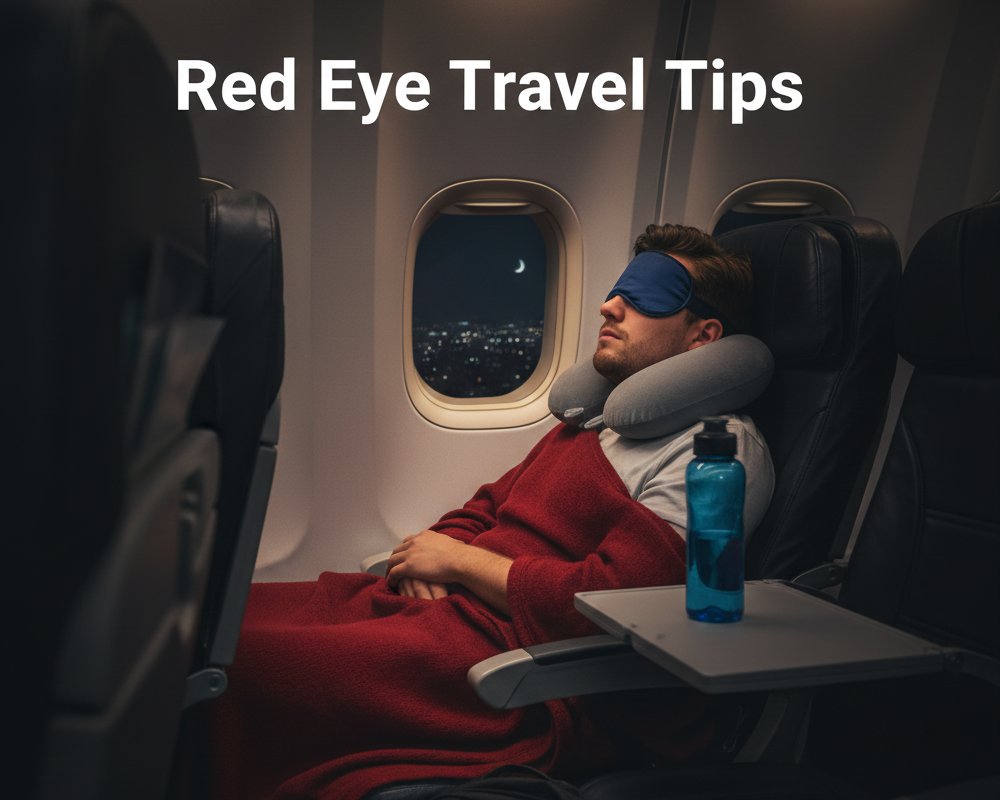
Red eye flights are one of those travel decisions that sounds miserable on paper but actually makes a lot of sense when you do them right. Late night departure, early morning arrival, cheaper fare, daytime hours saved — the math works out well if you know what you’re doing. Without preparation though, you land exhausted, dehydrated, and completely useless for whatever you had planned.
Red eye flights make sense on paper — cheaper fare, daytime hours saved, early morning arrival. Without preparation though, you land exhausted and dehydrated. With it, the difference in how you feel on arrival is significant. These red eye travel tips cover everything from booking to recovery so you actually get off the plane feeling like yourself. These red eye travel tips cover everything from booking to recovery so you actually get off the plane feeling like yourself. For broader travel planning that actually works, check this Travel Tips Guide.
What Is a Red Eye Flight?
Late night departure, early morning arrival — that’s a red eye in one line. The name comes from what passengers look like getting off the plane. These flights are most common on long-haul domestic routes, transcontinental crossings, and international travel across multiple time zones. What they do to your body is where any useful red eye travel tips have to start. This sleep and circadian rhythm research overview gives useful context before your first one.
Are Red Eye Flights Worth It?
With preparation — genuinely yes. Fares run 15-40% cheaper than daytime equivalents. You land in the morning with the whole day ahead instead of watching half of it disappear in transit. Airports at night are quieter, security is faster, planes are less chaotic. The real downsides — sleep gets disrupted, overnight dehydration hits harder at altitude, jet lag risk increases, and light sleepers just have a difficult time regardless. Bottom line — worth it if you prepare, painful if you don’t. For complete air travel safety preparation, our Air Travel Safety Tips for Students guide covers everything from TSA to baggage fees.
For students specifically, red eye flights solve a real problem — limited trip time and limited budget both at once. A Thursday night red eye means Friday morning arrival with the whole day ahead, no daytime hours lost in transit. And fares that run 15–40% cheaper than daytime flights make a meaningful difference when every dollar counts. The Cheap Student Flights to USA 2026 guide covers how to find the best red eye deals alongside other student flight strategies.
Red Eye Travel Tips Before Booking
Most people book a red eye the same way they book any flight — cheapest option, done. But a few decisions before you even pay make a significant difference to how the whole thing goes.
Choose the Right Seat
| Seat Type | Best For | Why |
|---|---|---|
| Window | Sleeping | No disturbances and head support |
| Exit Row | Tall passengers | Extra legroom |
| Bulkhead | Comfort seekers | Additional space |
| Aisle | Frequent movers | Easier bathroom access |
Window seat is the consistent recommendation for sleeping — you control the shade, you have something to lean against, and nobody wakes you up to get past.
Best Aircraft for Red Eye Flights
Airbus A350 and Boeing 787 Dreamliner are the two you want. Both have significantly better cabin pressurization and humidity control than older aircraft — and overnight, that difference is something you actually feel on arrival. Check seat maps before booking because position within the plane matters almost as much as the plane itself.
How to Sleep Better on a Red Eye Flight
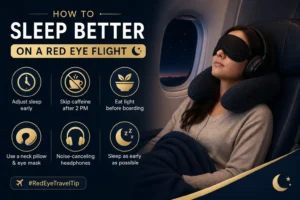
The most important red eye travel tips for sleep come down to preparation before you even board. Adjust your sleep schedule a day or two before so a late departure doesn’t completely shock your body clock. Seriously cut caffeine after 2 PM that day — this change alone makes a bigger difference than most people expect. Eat light before boarding because heavy food and sleep at altitude just don’t mix. Bring a real memory foam neck pillow and a proper blackout eye mask — not the paper ones airlines give out that let light through from every angle. Noise-canceling headphones with white noise or something calm are genuinely better than earplugs for blocking cabin noise. Sleep as early as possible after takeoff — every hour you stay awake makes the rest harder.
What to Pack on a Red Eye Flight
Memory foam neck pillow, blackout eye mask, noise-canceling headphones, compression socks, refillable water bottle, lip balm, moisturizer. Cabin air overnight is drying in a way daytime flights don’t really show you — it compounds over hours and you feel it on arrival if you didn’t moisturize. A small travel blanket is worth adding too if the airline doesn’t provide one — overnight cabin temperatures drop and a thin airline blanket often isn’t enough. For travel photography gear worth bringing, check the Travel Photography Tips Guide.
Airport Red Eye Travel Tips
Airport preparation actually begins — not on the plane itself. Alcohol before boarding feels like it’ll help — it won’t. It fragments sleep and makes overnight dehydration noticeably worse. Lounge access before a red eye is genuinely worth using to stretch and decompress rather than sitting tense at the gate. Arrive early because rushing before an overnight flight makes sleeping on it harder. Eat a proper high-protein meal at the airport rather than relying on airline food which tends to be heavy and sleep-disrupting. For apps that actually help with night travel planning, see Best Travel Apps for Students.
Jet Lag Management, Health and Hydration
Water every 30-45 minutes throughout the flight — this single habit makes more difference to arrival condition than almost anything else. Electrolytes on longer red eyes where dehydration builds across many hours. No alcohol, no sugary drinks. Watch goes to destination time when you board. Sunlight immediately after landing, even just stepping outside for ten minutes. Naps capped at 20-30 minutes maximum — longer ones push recovery back by a full day every time. For official jet lag guidance, Mayo Clinic’s Jet Lag page is reliable.
Business vs Economy: Red Eye Flight Comparison
| Characteristic | Economy | Business Class |
|---|---|---|
| Sleep Quality | Average | Excellent |
| Seat Recline | Limited | Lie-flat |
| Noise | High | Low |
| Cost | Low | High |
Business class lie-flat seats genuinely change the red eye experience on long-haul flights. That said, economy with the right preparation — window seat, proper neck pillow, blackout mask, hydration — gets you much further than most people think. The gap between a miserable economy red eye and a decent one is almost always preparation, not the upgrade.
How to Recover Fast After Landing
Recovery is the final piece of any overnight flight strategy — don’t skip it. Shower first thing — it resets your body after an overnight flight more effectively than anything else. Light breakfast with protein and fruit works better than carb-heavy options that cause energy crashes. Outside for sunlight within the first hour of landing — natural light is the most effective signal you can give your body that the night is over. Hold caffeine until mid-morning so it actually works when you need it most instead of doing nothing on a system that’s already running. If your journey continues solo, the Solo Travel Tips 2026 Guide covers maintaining energy and safety through long travel days.
Red Eye Flights With Kids or Groups
Traveling on a red eye with children adds a layer of complexity that solo travelers don’t deal with. Kids’ sleep schedules don’t adjust easily to late departures, so tire them out during the day before the flight. Bring familiar comfort items — a favorite blanket or toy makes settling down significantly easier at altitude. For groups, coordinate seat selections in advance rather than assuming the airline will seat everyone together. Aisle and window combinations work better than trying to get a full row because middle seats tend to be the worst for overnight sleep.
Common Red Eye Flight Mistakes
Alcohol before or during the flight. Skipping water to avoid the bathroom. Heavy meal right before boarding. Long nap immediately after landing. Forgetting to pack sleep essentials and relying on airline provisions. These are responsible for most genuinely bad red eye experiences — and every one of them is completely avoidable. Avoiding these mistakes is the simplest way to make sure your red eye travel tips actually work in practice
Professional Knowledge and Real-World Experience
Sleep environment beats seat class every time. A proper eye mask, timed hydration, and sleep discipline consistently outperform expensive upgrades. The gap between a miserable red eye and a manageable one almost always comes down to preparation — not what you paid.
Frequently Asked Questions
Q1. Are there health effects of red eye flights?
Occasional ones are fine for most people. Frequent red eyes without recovery time can build fatigue and affect immune function over time.
Q2. What’s the secret to surviving a red eye flight?
Sleep management, consistent hydration, the right seat, and a proper post-landing recovery routine. All four together — not one in isolation.
Q3. Sleep before or during the flight?
Light sleep before boarding, main sleep block during the flight. That combination works best consistently.
Q4. Should you eat on a red eye flight? Light meal before takeoff. Skip heavy airline meals — they make sleep harder and you feel worse for it on arrival.
Q5. Do red eye flights cause jet lag?
Yes, especially across time zones. Proper preparation significantly reduces the severity.
Q6. Are red eye flights cheaper?
Yes — typically 15-40% cheaper than daytime flights on the same routes.
Q7. What is the best seat for sleeping on a red eye?
Window seat consistently — head support, shade control, and no disturbances from other passengers.
Q8. How do I stay comfortable on a long red eye flight?
Compression socks for circulation, moisturizer for dry cabin air, a proper neck pillow, and consistent water intake throughout the flight.

Awamar Chheena is the founder of Travel Tips for Students. He writes practical guides to help students find travel deals, student discounts, and budget-friendly tips. His goal is to make travel more affordable for students around the world.