
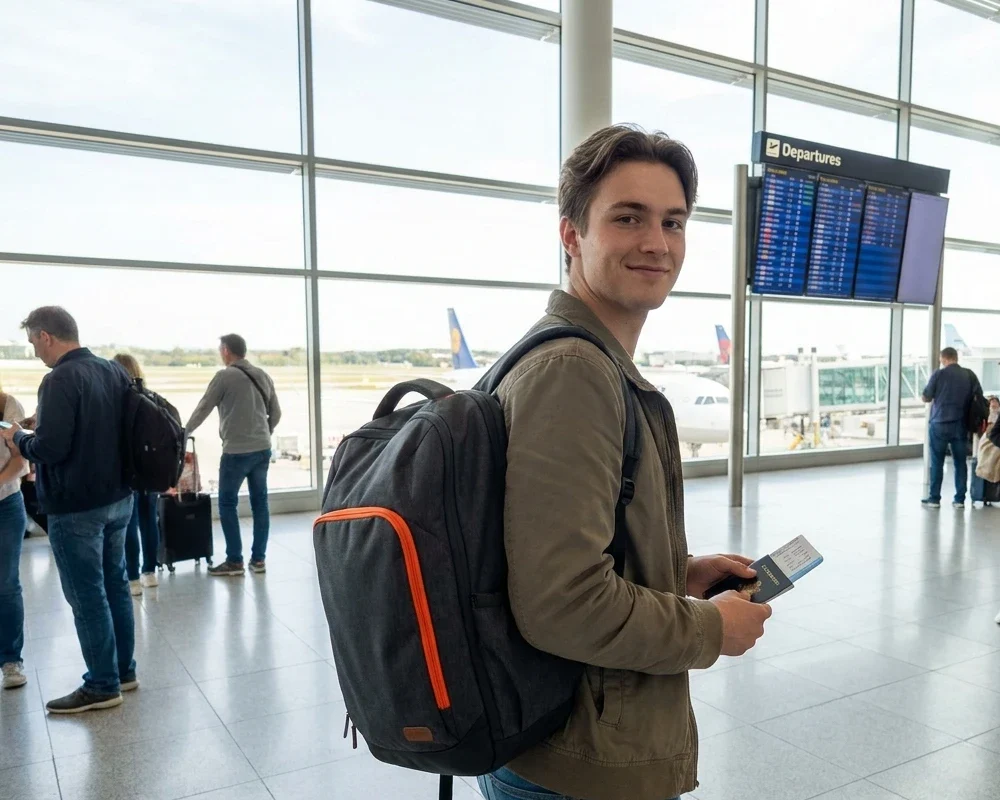
Flying for the first time or just tired of stressful airport experiences — either way, a little preparation makes every flight significantly smoother.
Budget airlines in 2026 have tightened baggage rules, security queues at major US airports are longer than ever, and one missed check-in deadline can cost more than the original ticket. These air travel safety tips for students cover everything that actually matters — from booking smart to landing safely — without the generic advice that fills every other travel guide.
For broader travel preparation before any trip, our Travel Safety Tips guide covers what to sort before you leave home.
Why Air Travel Safety Matters More for Students
Student travelers face specific challenges that experienced flyers have already figured out the hard way.
Tight budgets mean less room to absorb unexpected fees, rebooking costs, or medical expenses abroad. Less travel experience means security screening, customs, and connections feel more stressful than they need to. And flying on budget carriers — which is where student budgets naturally land — means fewer built-in protections when things go wrong. Understanding how air travel actually works removes most of that stress before it starts.
Choosing the Right Airline as a Student
Not all budget airlines are equal — and the cheapest fare upfront often isn’t the cheapest fare by the time you reach the gate.
Before booking anything, check exactly what the base fare includes. Frontier, Spirit, and Ryanair all charge separately for carry-on bags, seat selection, and check-in at the airport. On some routes these fees add $60–120 to a fare that looked cheap at first glance.
What to compare before booking:
| Factor | What to Check |
|---|---|
| Baggage policy | Carry-on size limits and fees |
| Change/cancellation | Refund or credit policy |
| On-time record | Check on FlightAware or AirHelp |
| Student discount | StudentUniverse or ISIC card eligibility |
| Safety rating | JACDEC or AirlineRatings.com |
StudentUniverse offers verified student fares on major carriers worth checking before booking through a standard platform. For a complete guide to finding the cheapest student flights, our Cheap Student Flights to USA 2026 covers every platform and strategy worth knowing.
Pre-Flight Checklist — What to Sort Before You Leave Home
Most air travel problems start before the airport. Bad preparation at home creates avoidable stress at check-in.
Documents Passport with at least 6 months validity beyond your travel dates. REAL ID for US domestic flights — standard driver’s license no longer accepted at TSA from May 2025 onward. Visa documentation if required. Travel insurance confirmation — digital and printed copy both.
Booking confirmations Screenshot everything offline — airline app, hotel booking, and onward transport. Assuming you’ll have airport Wi-Fi when you need it is how people miss connections.
Health prep Personal medications in carry-on — never checked luggage. Enough for the full trip plus 3-4 extra days. Prescription medications in original labeled packaging to clear customs without issues.
Travel insurance Non-negotiable for international flights. One medical incident abroad without coverage costs more than the flight itself. For official health guidance by destination, check CDC Travelers Health.
TSA Security — What Students Get Wrong
Security screening is where most first-time flyers lose time and occasionally money.
The 3-1-1 rule applies to every US flight:
- Liquids in containers of 3.4oz (100ml) or less
- All containers fit in one quart-sized clear bag
- One bag per passenger
Solid toiletries — shampoo bars, solid deodorant, solid sunscreen — bypass this rule entirely and take up less space. Worth switching before any carry-on only trip.
What slows you down at security:
- Laptop not removed from bag before the scanner
- Shoes with metal — wear slip-ons on travel day
- Jacket or belt forgotten — causes rescreening
- Liquids in carry-on that exceed limits — confiscated on the spot
TSA PreCheck is worth the $85 for students who fly regularly — dedicated lane, shoes and laptops stay in the bag, significantly faster. For official TSA guidelines and prohibited items, check TSA.gov before packing anything questionable.

Baggage — The Fees Students Don’t See Coming
Budget airline baggage rules catch more students off guard than any other single air travel issue.
Standard carry-on rules for major US budget carriers:
| Airline | Personal Item | Carry-On | Checked Bag |
|---|---|---|---|
| Spirit | Free (small) | $45–65 | $45–65 |
| Frontier | Free (small) | $30–60 | $30–60 |
| Southwest | Free | Free | First 2 free |
| United Basic | Free (small) | $30–50 | $35–45 |
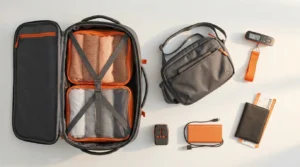
Rule that saves money every time: Weigh your bag at home before leaving. A portable luggage scale costs $8 and the first time you use it instead of paying gate fees it pays for itself many times over.
Pack your heaviest items — jacket, boots, dense electronics — in what you wear on the plane rather than what you pack. Every item worn is weight and volume saved.
In-Flight Safety Habits
Commercial aviation is the safest form of long-distance travel — but good habits still matter.
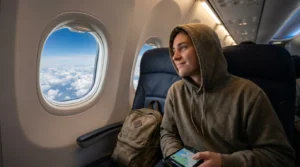
Seatbelt always fastened when seated — not just during takeoff and landing. Unexpected turbulence happens at cruise altitude and injuries from unbuckled passengers are entirely preventable.
Keep your bag accessible — medication, phone, and travel documents in the bag under the seat in front, not in the overhead bin. Overhead bins sometimes get reassigned on full flights.
Hydration — cabin air is significantly drier than normal air. Drink water consistently through any flight over 3 hours. Dehydration makes jet lag significantly worse and is entirely avoidable.
Jet lag management — set your watch to destination time when you board. Sleep or stay awake based on what time it is at your destination, not where you departed from. Adjusting your schedule by the flight start rather than the end reduces jet lag noticeably.
Flight Delays and Cancellations — Know Your Rights
Flight disruptions happen more than airlines like to advertise — knowing your rights before it happens means you handle it calmly rather than panicking at the gate.
US domestic flights: Airlines are not legally required to compensate for delays caused by weather. For cancellations within their control, you are entitled to a full refund if you choose not to rebook.
EU flights (including flights TO or FROM EU): EU Regulation EC 261/2004 entitles passengers to compensation of €250–600 for delays over 3 hours caused by the airline. This applies to any flight departing from an EU airport regardless of your nationality.
What to do when your flight is delayed:
- Screenshot the delay notification immediately
- Ask gate staff for meal vouchers — many airlines provide these for delays over 2 hours but won’t offer unless asked
- Check rebooking options on the airline app simultaneously — app rebooking is often faster than the gate queue
- Contact travel insurance within 24 hours if delay exceeds your policy threshold
For current passenger rights guidance, check AirHelp’s passenger rights guide.
Staying Safe at Airports
Airports — especially large international ones — are high-theft environments. Distracted travelers with expensive gear are the most common targets.
Never leave your bag unattended — not at security, not at the gate, not at a cafe. Bag theft at airports takes seconds and you often don’t notice until you’re boarding.
Keep your passport and boarding pass in a secure inner pocket or money belt — not a back pocket or open bag compartment. Losing a passport at an international airport is one of the most expensive and stressful travel situations possible.
For airport-specific safety and which apps to have ready, our Best Student Travel Apps 2026 covers navigation, offline maps, and safety tools worth downloading before any flight.
Solo Student Air Travel — Specific Tips
Flying alone for the first time feels more manageable with a few specific habits in place.
Share your flight details — airline, flight number, departure time, arrival airport — with one trusted person at home before you leave. If something goes wrong, they know where to start.
Download offline maps for your arrival city before you board — not when you land and discover the airport Wi-Fi requires registration. Google Maps offline takes two minutes to set up and works completely without data.
Have your accommodation address saved offline and accessible without internet. This is the one piece of information you need immediately on arrival and the one most people assume they’ll just look up when they get there.
For comprehensive solo travel preparation beyond just flying, our Solo Travel Tips 2026 Guide covers everything from destination choice to safety habits.
International Flights — Extra Preparation
International flights add layers that domestic flights don’t have.
Customs declaration — fill it out honestly. Random checks are genuinely random and getting caught with an undeclared item creates problems that ruin the start of any trip.
Connection time — minimum 90 minutes for domestic connections, 2.5–3 hours for international. Budget airlines especially are prone to slight delays that cascade into missed connections with insufficient buffer time.
Electronics and power — universal travel adapter sorted before departure. Different socket standards catch people out consistently in Europe, Asia, and South America. For comprehensive packing guidance, our Travel Packing Tips 2026 covers exactly what to bring and what to leave.
Common Air Travel Mistakes Students Make
Booking the cheapest fare without reading the conditions — the fee structure on budget carriers turns cheap fares into expensive ones faster than people expect.
Arriving at the airport too late — budget airline check-in desks close 45–60 minutes before departure, not 30. Miss that window and you lose the ticket entirely with no refund.
Putting irreplaceable items in checked luggage — passport, medications, electronics, travel documents. Checked bags get delayed and occasionally lost. Everything that would ruin your trip goes in carry-on only.
Not downloading things offline before boarding — maps, entertainment, translation apps, accommodation confirmations. Assuming connectivity exists when you need it is how people end up stressed and stranded.
Ignoring travel insurance — one cancelled flight, one medical incident, one lost bag. Any of these without insurance costs significantly more than the insurance would have.
Frequently Asked Questions — Air Travel Safety Tips for Students
Q1: What documents do I need for a domestic US flight in 2026? REAL ID compliant driver’s license or passport. Standard state driver’s licenses no longer accepted at TSA from May 2025. Check your license has the REAL ID star marking before your travel date.
Q2: How early should students arrive at the airport? Domestic US flights — 1.5 to 2 hours minimum. International flights — 3 hours minimum. Budget airline terminals with longer security queues may need extra time.
Q3: Can I bring a backpack and a carry-on on budget airlines? Depends on the airline. Most budget carriers count a backpack as your one personal item and charge separately for a carry-on bag. Check the specific airline’s size limits before packing.
Q4: What happens if my flight is cancelled? You are entitled to a full refund for any cancelled flight on a US carrier. Alternatively, the airline must rebook you on the next available flight at no extra cost. Get it in writing at the gate.
Q5: Do I need travel insurance for domestic flights? Less critical for domestic, but still worth having for medical coverage and trip cancellation. Non-negotiable for international flights.
Q6: How do I avoid checked baggage fees on budget airlines? Pack everything in a personal item that fits under the seat. Wear your heaviest items on the plane. Use compression packing cubes to reduce clothing volume. Weigh your bag at home before leaving.
Q7: Is it safe to fly budget airlines as a student? Yes — budget airlines in the US and Europe operate under the same FAA and EASA safety regulations as major carriers. Safety standards are not where they cut costs. Check airline safety ratings at AirlineRatings.com for independent assessments.

Awamar Chheena is the founder of Travel Tips for Students. He writes practical guides to help students find travel deals, student discounts, and budget-friendly tips. His goal is to make travel more affordable for students around the world.
