

Quick Answer: These charcuterie board travel tips work best with 3-4 affordable items (local bread, one cheese, one cured meat, one fruit), assembled at the destination rather than packed pre-made, and kept cool for no more than 2 hours without refrigeration. This approach works for study-abroad picnics, road trip rest stops, and hostel common-room gatherings without needing special equipment.
Picnic culture is a genuine part of budget student travel — especially for study-abroad students in Europe, where public parks and free viewpoints double as the cheapest “meal out” option available. A simple spread of local cheese, bread, and fruit costs a fraction of a restaurant meal and turns any stop into an actual experience.
Why This Matters for Student Travelers
Restaurant meals add up fast on a student budget — especially in expensive cities. A market-bought spread of bread, cheese, and cured meat costs significantly less than a sit-down meal, works as lunch or a shareable snack, and turns a park bench or hostel rooftop into a genuine travel moment. This isn’t about elaborate boards — it’s about eating well on a budget while traveling.
The Student Budget Version — Keep It Simple
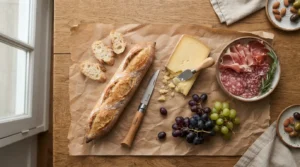
Skip the pre-made travel charcuterie boards and specialty carrying cases sold for home entertaining — they’re unnecessary for travel and add cost and luggage weight. The student version works with:
- One local bread — a baguette, a market loaf, or flatbread depending on the country
- One cheese — buy what’s regionally cheap (this is genuinely part of the fun of budget travel — try the local cheese)
- One cured meat — salami, prosciutto, or the regional equivalent, bought sliced at a market to avoid needing a knife
- One fruit — grapes, figs, or whatever’s in season locally
That’s a complete, satisfying spread for $8-15 depending on the country, split between two or more people.
Assemble at the Destination, Not Before
The single most important tip: buy the ingredients on the way, assemble at the park bench, viewpoint, or hostel table — don’t pre-pack a full board expecting it to survive a day of travel. Pre-assembled boards get warm, soggy, and unappealing by the time you actually sit down to eat.
What to carry instead:
- A cutting board is unnecessary — most markets will slice cheese and meat for you on request
- Bring a small reusable bag for the bread and packaged items
- If ingredients need to wait more than an hour before eating, keep them in the shadiest part of your bag, away from direct sun
Food Safety Basics for Travel Snacking
Cured meats and hard cheeses travel reasonably well without refrigeration for short periods, but there are limits worth knowing:
- Keep cheese and cured meats out of direct heat for no more than about 2 hours
- Soft cheeses (brie, fresh mozzarella) spoil faster than hard cheeses (parmesan, aged cheddar) — choose hard cheese if you’re not eating within an hour or two
- If you’re doing a longer road trip and want to prep ahead, a small soft cooler with one ice pack extends safe time significantly
- For official guidance on food safety while traveling, the FDA’s food safety guidelines and CDC travel health resources are the most reliable sources
Packing Ingredients Separately for the Trip
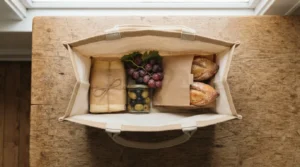
If you’re not buying everything fresh right at the picnic spot — say, prepping the night before a road trip — pack each component separately instead of assembling ahead of time:
- Cheese and cured meat — wrap individually in wax paper or a small container, not touching each other, to avoid moisture transfer
- Bread — a paper bag breathes better than plastic and keeps crust from going soft
- Fruit — pack whole where possible (grapes on the stem, whole figs) and slice on arrival
- Anything that rolls or leaks (olives, honey, jam) — small leak-proof containers or reused small jars work fine, no need to buy special travel containers
This is the same principle professional caterers use for any perishable spread: components travel far better separately than pre-assembled, regardless of budget.
Where This Actually Works for Students
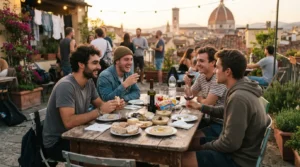
Study abroad picnics — most European cities have free public parks perfectly suited to a market-bought spread. It’s the single cheapest “meal out” available in expensive cities like Paris, Rome, or Barcelona.
Road trip rest stops — buying local at a farmers market or grocery store along the route beats fast food both on cost and on making the trip feel more intentional.
Hostel common rooms — pooling a few euros with roommates for a shared spread is a common, genuinely social way student travelers connect on the road.
For more ways to stretch a travel budget on food and daily costs, the budget travel tips for expensive US cities guide covers the same cost-conscious approach applied more broadly.
Frequently Asked Questions
Is a charcuterie board a cheap way to eat while traveling as a student? Yes — a simple spread of bread, one cheese, one cured meat, and one fruit typically costs $8-15 total, split between two or more people, which is usually cheaper than a sit-down restaurant meal in most cities.
How long can cheese and cured meat sit out safely while traveling? Generally no more than about 2 hours without refrigeration. Hard cheeses and cured meats hold up better than soft cheeses over that window.
Do I need special equipment to make a travel charcuterie board? No. Most markets slice cheese and meat on request, so a knife or cutting board usually isn’t necessary. A reusable bag is enough.
Is this practical for a study abroad trip specifically? Yes — it’s one of the most common budget-eating habits among study-abroad students in Europe, where public parks make an ideal, free setting for a market-bought meal.
Final Verdict
A charcuterie-style spread isn’t just a home-entertaining trend — for student travelers, it’s a genuinely practical way to eat well on a tight budget while turning a park bench or hostel rooftop into part of the trip itself. Keep it simple, buy local, assemble on arrival, and skip the specialty equipment.
These charcuterie board travel tips work whether you’re picnicking through a study-abroad semester or making a road trip stop feel special

Awamar Chheena is the founder of Travel Tips for Students. He writes practical guides to help students find travel deals, student discounts, and budget-friendly tips. His goal is to make travel more affordable for students around the world.