
Quick Answer: These Mongolia travel tips for students are built around one honest fact — it works best for students already doing the Trans-Mongolian or Trans-Siberian railway route between Russia and China, rather than as a standalone destination. US citizens can enter visa-free for stays under 30 days. Budget travelers can get by on roughly $50/day covering ger stays, shared transport, and local food. The honest catch: getting there costs more than the trip itself — flights or train tickets to Ulaanbaatar aren’t cheap, and the payoff is a genuinely remote, low-infrastructure experience, not a typical study-abroad weekend trip.
Mongolia isn’t a spring break destination, and it’s not trying to be. For students already backpacking the Trans-Siberian route, doing a gap year, or specifically chasing a remote, off-grid experience, it’s one of the most genuinely different places available. For students looking for an easy add-on weekend trip during a European semester abroad, it’s usually not the right fit — and that’s worth saying honestly upfront.
Mongolia Travel Tips for Students: Is It a Realistic Trip?
Be honest with yourself before booking: Mongolia isn’t Portugal or Ireland, where you fly in for €40 and figure it out as you go. It’s remote, transport outside Ulaanbaatar is unpredictable, and English is limited once you leave the capital. It works well for:
- Students already traveling the Trans-Mongolian or Trans-Siberian railway between Beijing, Ulaanbaatar, and Moscow/Irkutsk
- Gap year travelers with more flexible time and higher risk tolerance
- Students specifically seeking a remote, low-tourist, off-grid experience rather than convenience
It’s a poor fit for a quick weekend trip squeezed between classes during a semester abroad — the payoff needs a real time investment (7-10 days minimum) to be worth the effort of getting there.
Getting There: The Trans-Mongolian Railway Route
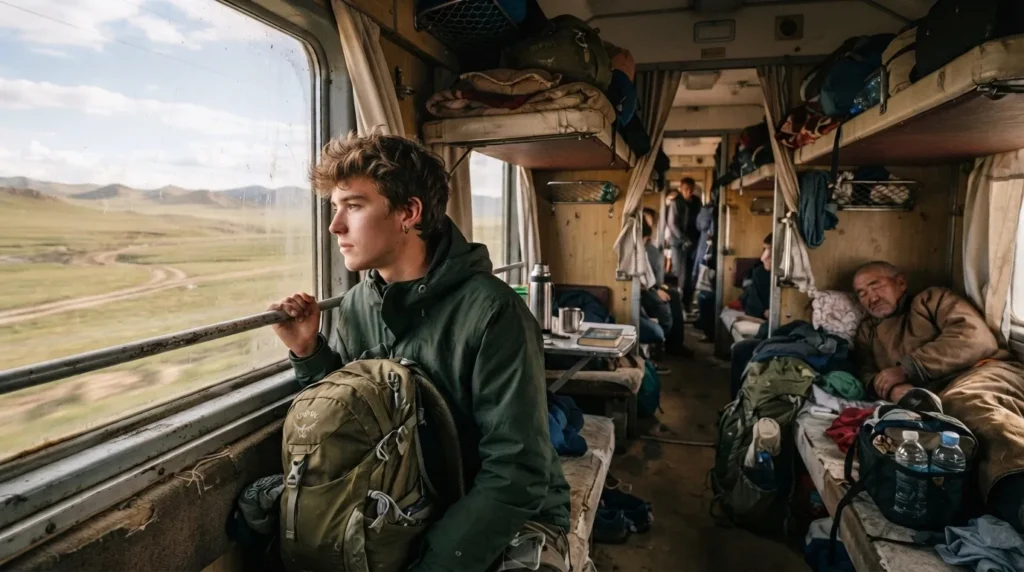
This is genuinely the most student-relevant way into Mongolia, and it reopened in June 2025 after a five-year pandemic suspension. The Beijing–Ulaanbaatar train connects into the wider Trans-Siberian network toward Russia. Budget-conscious backpackers combine a train-plus-overnight-bus routing for roughly $40, versus $150-350 for a direct train ticket, depending on class and how far ahead you book.
Visa note for US students: Mongolia is visa-free for US citizens for stays under 30 days. If your route passes through China, note that a Chinese visa (~$185 for Americans) is a separate, often slower process — factor this into planning well before departure.
Real Daily Budget for Student Backpackers
| Expense | Cost (USD) |
|---|---|
| Shared transport (vans/shared taxis) | $5-15 |
| Ger (traditional tent) stay | $10-30/night |
| Meals | $3-7 |
| Local guide (recommended for countryside) | $30-60/day |
Realistic all-in daily budget: around $50/day, staying mostly in gers and hostels, using shared transport, and skipping domestic flights.
When to Go — and When to Skip It
| Season | What to Expect |
|---|---|
| Late June-early September | Best window for first-time visitors — warm days, festivals, most accessible |
| September | Golden landscapes, colder nights, fewer tourists |
| October-April | Genuinely harsh conditions — for experienced travelers with local guides only |
Don’t attempt independent countryside travel outside the June-September window without significant experience and a local guide.
Staying with Nomadic Families (Ger Etiquette)
Nomadic families live in gers (not “yurts” — that’s the Russian term), and staying with one is closer to participation than accommodation. Genuine etiquette matters here, not as tourist trivia but as basic respect:
- Step over the threshold, never on it
- Move clockwise inside the ger
- Accept offered food, even a small portion — refusing is considered rude
Money and Connectivity Reality
Outside Ulaanbaatar, cash is the only reliable option — carry small bills and exchange money in the city before heading into the countryside, since rural ATMs are unreliable. Download offline maps and translation tools before leaving towns; connectivity drops fast once you’re outside cities.
The Honest Risk Factors
Mongolia is genuinely safe with regard to crime. The real risks are environmental: sudden weather changes, difficult river crossings in rural areas, dehydration, and the sheer scale of distances (a 150km off-road stretch can take 6-8 hours). For current, verified safety guidance, check the US State Department’s Mongolia travel advisory before finalizing any independent countryside travel.
If Mongolia’s remoteness feels like too much for now, our Irish Travel Tips guide covers an easier first solo destination.
Frequently Asked Questions
Is Mongolia a good student trip, or should I skip it? It’s a strong fit if you’re already doing the Trans-Mongolian/Trans-Siberian route or a gap year with flexible time. It’s not a good fit for a quick weekend add-on during a semester abroad.
Do US students need a visa for Mongolia? No, for stays under 30 days. If your route passes through China, that’s a separate visa process to plan for.
How much does a student backpacking trip through Mongolia cost per day? Roughly $50/day covering ger stays, shared transport, and local food, based on current backpacker cost breakdowns.
Is the Trans-Mongolian Railway actually running in 2026? Yes — the Beijing-Ulaanbaatar route resumed in June 2025 after a five-year pandemic suspension and is currently operating.
Do I need a guide to travel Mongolia’s countryside? Yes, strongly advisable outside Ulaanbaatar, given unpredictable weather, limited infrastructure, and long, difficult distances between points.
Final Verdict
Mongolia rewards students who are already on a longer overland route or specifically chasing a remote, unfiltered travel experience — it does not reward students looking for an easy, cheap weekend detour. Go in with realistic expectations about distance, cost of getting there, and infrastructure, and it becomes one of the most genuinely memorable stops on a gap year or Trans-Siberian trip.

Awamar Chheena is the founder of Travel Tips for Students. He writes practical guides to help students find travel deals, student discounts, and budget-friendly tips. His goal is to make travel more affordable for students around the world.