
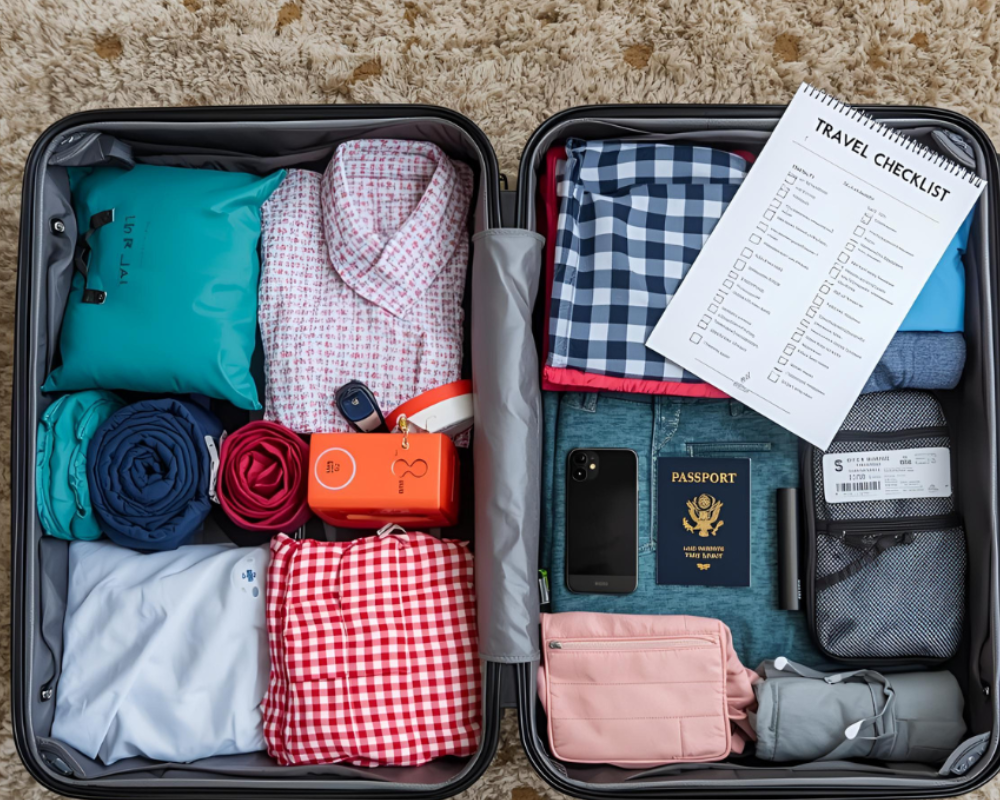
Travel Packing Tips: The Ultimate 2026 Guide to Packing Light, Smart & Stress-Free
Traveling is genuinely exciting — but packing wrong can turn a great trip into a stressful one before you even leave the airport. Airlines in 2026 are tightening baggage rules, overhead bin limits are stricter than ever, and gate-checking fees add up fast. Getting your packing right saves money, saves time, and removes a whole layer of travel stress that most people don’t realize they’re carrying until they don’t have to anymore. These travel packing tips cover everything — carry-on strategy, packing systems, destination-specific considerations, and the mistakes that cost people money and sanity every single trip. For more travel planning resources, check our Travel Tips for Students homepage.
Why Smart Packing Actually Matters in 2026
With Basic Economy fares now standard across most major US carriers, overhead bin access isn’t guaranteed and checked bag fees have become genuinely significant costs. Frontier, Spirit, and similar budget carriers charge separately for everything — knowing the rules before you pack saves real money at the gate.
But smart packing isn’t just about avoiding fees. It’s about moving through airports, transit stations, and city streets without being slowed down by luggage that’s too heavy or too bulky to manage efficiently. The traveler who packs light moves faster, boards easier, exits faster, and generally has a better time from the moment they leave home to the moment they arrive. For trip planning that works with smart packing, our Europe Winter Travel Itinerary covers routes and destinations with specific packing considerations for each season.
The Carry-On Only Strategy — Core Travel Packing Tips
Carry-on only travel is the gold standard for anyone traveling a week or less — and with the right system, it works for longer trips too. No checked bag fees, no waiting at baggage claim, no risk of lost luggage, and complete flexibility to change plans without worrying about where your bags are.
Rolling vs Folding Roll clothes rather than fold them — takes up significantly less space, reduces creasing, and makes it easier to see everything you’ve packed at a glance. This single habit change makes a noticeable difference in how much fits in any bag.
Packing Cubes Packing cubes are the most consistently recommended travel packing tool by experienced travelers — they compress clothing, organize by category, and turn a chaotic bag into something you can actually navigate. Small cubes for socks, underwear, and tech accessories. Medium cubes for t-shirts and light tops. Large cubes for jeans, jackets, and heavier items. The compression zipper versions squeeze out extra air and reduce volume by 25-30% compared to loose packing.
Backpack vs Suitcase A travel backpack passes size checks on more airlines than a standard carry-on suitcase — worth considering for budget airline travel specifically. Backpacks also work better on public transport, cobblestone streets, and anywhere that rolling luggage becomes impractical.
Layering Over Bulking Layering clothing handles varying weather conditions without requiring a heavy coat that takes up half your bag. A base layer, mid layer, and outer layer system covers a wide temperature range in significantly less space than individual heavy items.
For long-haul trips and group travel packing specifically, our Student Trips to South America covers smart packing strategies for extended multi-country travel.
The 5-4-3-2-1 Rule for 7-Day Trips
The most practical travel packing framework for a week-long trip — simple enough to remember, flexible enough to adapt:
- 5 Tops — mix of t-shirts and one smarter option
- 4 Bottoms — jeans, shorts, or athleisure that mix and match with all tops
- 3 Layers — lightweight jacket, hoodie, and one weatherproof layer
- 2 Pairs of Shoes — comfortable walking shoes and one versatile pair for evenings
- 1 Dressy Outfit — for dinners, events, or anything that requires something smarter
The key to making this work is choosing neutral colors that mix and match rather than outfit-specific pieces that only work one way. Everything should work with everything else — that’s what makes seven outfits out of thirteen items possible. For digital packing checklist apps that help you track and organize everything before departure, check our Best Travel Apps for Students 2026 guide.
TSA Liquids Rule — Essential for US Travel
For anyone traveling through US airports, the 3-1-1 rule applies to all liquids in carry-on bags:
- 3.4 ounces (100ml) or less per container
- All containers must fit in 1 quart-sized clear plastic bag
- 1 bag per passenger
Solid alternatives bypass this rule entirely — solid shampoo bars, solid conditioner, solid deodorant, and solid sunscreen all travel without restriction and take up less space than liquid versions. Worth switching to these before any trip where you’re carrying on only.
The Ultimate 2026 Travel Packing Checklist
Clothing 5-4-3-2-1 rule items, swimwear if relevant, sleepwear that doubles as lounge wear to save space.
Toiletries Travel-size toothbrush and toothpaste. Solid shampoo and conditioner bars. Solid or travel-size deodorant. Skincare in travel sizes or solid formats. Razors. Basic first aid items — plasters, personal medications, rehydration sachets, pain relief.
Electronics Universal travel adapter — essential for international travel and surprisingly easy to forget. Power bank — 20,000mAh minimum for long travel days when outlets aren’t available. Noise-canceling earbuds or headphones for flights and transit. Charging cables for every device. Lightweight laptop or tablet if needed.
Documents Passport with at least six months validity. REAL ID for US domestic flights. Travel insurance documentation. Flight and accommodation confirmations — digital and printed copies stored separately. Visa documentation where required. Emergency contacts list saved offline.
Carry-On Essentials Extra set of underwear and one change of clothes in your personal item — in case checked luggage is delayed or lost. All medications in carry-on, never checked. Phone charger and power bank accessible. Snacks for long journeys. Neck pillow and eye mask for overnight flights.
Destination-Specific Travel Packing Tips
Packing for Europe
European cities involve a lot of walking — cobblestone streets, hills, distances between sights. Comfortable already broken-in walking shoes are non-negotiable. Light layers handle the variable weather across different countries and seasons. A compact umbrella fits in any bag and gets used on most European trips. For a detailed European travel guide with specific destination packing considerations, our Irish Travel Tips covers what you actually need for Atlantic weather specifically.
Packing for Asia
Lightweight, breathable fabrics for hot and humid climates — synthetic materials that dry quickly are more practical than cotton in Southeast Asia. Modest clothing for religious sites — a lightweight scarf or sarong takes up almost no space and covers multiple situations. Slip-on shoes for temples where you remove footwear constantly. Compact rain jacket for monsoon season destinations.
Packing for South America
Layering is essential for destinations that span multiple altitudes — the Amazon and Andean highlands require completely different clothing. Sun protection for high altitude destinations where UV exposure is significantly more intense than at sea level. Insect repellent for jungle and rainforest areas. For comprehensive South America travel preparation, our Student Trips to South America covers everything from packing to safety in detail. For Galapagos-specific preparation, our Ecuador and Galapagos Local Travel Tips covers the specific requirements of island travel.
Packing for Winter Travel
Layering over bulking — three effective layers beat one heavy coat for both warmth and space efficiency. Thermal base layers compress small and add significant warmth. Merino wool is worth the investment for cold weather travel — warm, odor-resistant, and packable. Waterproof outer layer rather than just warm. For cold weather destination travel specifically, our Europe Winter Travel Itinerary covers seasonal packing in detail.
Solo Travel Packing Tips
Solo travelers carry everything themselves — through airports, on public transport, up hostel staircases, across cities. This makes packing light not just convenient but genuinely important. Every item you question whether to bring should be left behind. You can buy almost anything you forget almost anywhere. For comprehensive solo travel preparation beyond just packing, our Solo Travel Tips 2026 Guide covers every aspect of traveling alone effectively.
Safety Packing Tips
Anti-Theft Travel Gear Anti-theft bags with hidden zippers and slash-resistant material for crowded tourist areas. Money belt worn under clothing for passport and emergency cash — harder to access, which is exactly the point. RFID-blocking wallet to prevent contactless card skimming. These aren’t paranoid purchases — they’re practical ones that cost very little relative to what they protect.
Document Security Physical and digital copies of passport, travel insurance, and all bookings stored separately from originals. Cloud backup means everything is accessible from any device if originals are lost or stolen. This takes five minutes to set up and has saved countless trips from becoming disasters.
Medications and Health Essentials All medications in carry-on — never checked luggage. Enough for the full trip plus a few extra days. Prescription medications in original labeled packaging. Rehydration sachets, basic pain relief, anti-diarrhea medication, and plasters cover the most common health situations on the road. For comprehensive travel safety preparation that goes beyond just packing, our Travel Safety Tips Guide covers everything you need to know.
Tech Packing Tips for 2026
Universal Travel Adapter One universal adapter covers multiple countries — lighter and more versatile than country-specific adapters. Essential for international travel and surprisingly often forgotten.
Power Bank 20,000mAh minimum for long travel days. USB-C compatible for modern devices. Some airlines have restrictions on power bank capacity for checked luggage — always carry in your personal item.
Offline Downloads Download Google Maps offline for every destination before departure. Download entertainment for long flights. Download translation apps with offline language packs. Assuming you’ll have reliable internet when you need it is how people get stuck. For app recommendations across every travel category, our Best Travel Apps for Students 2026 covers everything worth having before any trip.
Photography Gear Lightweight tripod for solo travelers — takes up minimal space and completely changes what photos you can take of yourself. Remote shutter or phone timer. Extra memory cards. Portable hard drive for backing up photos on longer trips. For detailed travel photography guidance, our Travel Photography Tips Guide covers everything from equipment to technique.
Common Travel Packing Mistakes to Avoid
Overpacking “Just in Case” If you haven’t worn something in the past month at home, you almost certainly won’t wear it on the trip either. The just-in-case mentality is responsible for most overpacked bags. Leave it. You can buy it if you genuinely need it.
Packing Heavy Shoes Shoes are the heaviest and bulkiest items in any bag. Two pairs maximum — wear the heavier pair on the plane rather than packing them. Every extra pair of shoes is significant weight and volume you’re carrying for the entire trip.
Ignoring the Personal Item On US airlines, the personal item that fits under the seat in front is free on almost every fare. Use it — it’s genuinely significant extra capacity for items you need accessible during the flight. Medications, electronics, snacks, and a change of clothes all belong here.
Packing Liquids Unnecessarily Solid alternatives exist for almost every liquid toiletry — shampoo bars, solid conditioner, solid deodorant, solid sunscreen. They take up less space, weigh less, and bypass TSA liquid restrictions entirely. Worth switching before any carry-on only trip.
Not Weighing Your Bag Weigh your packed bag before leaving for the airport — not when you’re already there. Most airlines allow 22-23 lbs for carry-on bags. A portable luggage scale costs almost nothing and saves the gate-check experience.
New Shoes on Travel Day New shoes cause blisters at exactly the worst possible moment. Always wear any new shoes for at least a few weeks before a trip to break them in properly.
Travel Packing Tips by Trip Length
Weekend Trip (2-3 days) Personal item only — no carry-on needed if you pack smart. Five items of clothing maximum. Toiletries in a small pouch. Phone, charger, power bank. Everything fits in a 20-25L daypack.
One Week Trip 5-4-3-2-1 rule. Carry-on plus personal item. Packing cubes essential. No checked luggage needed.
Two Week Trip Carry-on plus personal item still works with strategic laundry — most accommodations have laundry facilities or nearby laundromats. Pack for one week and do laundry once. Lighter and cheaper than checking a bag.
Month-Long Trip Same principle — pack for one week, use laundry facilities. The travelers who pack heaviest for long trips consistently regret it most. Light packing scales better the longer the trip.
Packing for Air Travel Specifically
What to Wear on the Plane Your heaviest, bulkiest items — that winter coat, those thick-soled shoes, the heavy jeans. Everything worn rather than packed is space and weight saved. Layers that can be removed and stuffed under the seat if the cabin is warm.
What Goes in Your Personal Item Everything you need during the flight — phone, charger, earphones, medications, snacks, a book or tablet, neck pillow, eye mask. Also a change of clothes in case checked luggage is delayed. This bag stays accessible, your carry-on goes in the overhead bin.
What to Pack Last Items you use the morning of departure — phone charger, toiletries, any medications taken that morning. Leave space for these in an accessible pocket so you’re not unpacking to find them.
For air travel safety considerations beyond packing, our Private Air Travel Safety Tips covers what most travel guides skip entirely.
Sustainable Travel Packing Tips
Reusable water bottle — saves money, reduces plastic waste, and most airports have water filling stations past security. Reusable shopping bag that folds flat. Solid toiletries reduce plastic packaging significantly. Quick-dry microfiber towel instead of expecting accommodation to always provide them. These choices add up meaningfully across multiple trips.
For travel that prioritizes cultural connection and mindful consumption beyond just sustainable packing, our Hygge Travel Experiences guide covers a travel philosophy worth understanding.
Travel Packing Tips FAQ
How do I pack light for a 7-day trip carry-on only?
Honestly the 5-4-3-2-1 rule changed how I pack completely. Five tops, four bottoms, three layers, two shoes, one dressy outfit — that’s it. Throw in packing cubes to compress everything down and choose colors that actually mix and match rather than outfit-specific pieces. Wear your heaviest stuff on the plane instead of packing it and you’d be surprised what fits in a carry-on.
Can I wear multiple layers on the plane to save bag space?
Yes and I do this every single trip. Your heaviest jacket, thickest hoodie, bulkiest jeans — wear them boarding, stuff the jacket in the overhead bin or under the seat once you’re settled. Saves more space than most people expect and costs nothing.
What are the best packing organizers in 2026?
Compression packing cubes — not the regular ones, specifically the compression versions with the double zipper that squeezes out air. They genuinely reduce clothing volume by 25-30% compared to just throwing things in loose. Worth every penny and you’ll wonder how you traveled without them.
How do I pack a travel backpack efficiently?
Heavy items go at the bottom closest to your back — shoes, electronics, anything dense. That’s where the weight sits best and keeps the bag balanced on your shoulders. Items you need during transit go in outer pockets where you can actually reach them without unpacking everything. TSA liquids bag in an accessible spot you don’t have to dig for at security.
What should I never pack in checked luggage?
Medications — always carry-on, no exceptions. Travel documents, valuables, electronics, and anything you’d actually need if your bag got delayed or lost. Checked luggage goes missing more than people admit and the bags that get lost are always the ones with everything important in them.
How do I avoid overweight bag fees?
Get a portable luggage scale — they cost almost nothing and the first time you use it at home instead of at the gate it pays for itself ten times over. Know the exact weight limit for your specific airline and fare type before you even start packing, not after.
What’s the single most impactful travel packing tip?
Leave anything you’re uncertain about. Seriously — if you’re standing there holding something thinking “maybe I’ll need this,” put it back. You can buy almost anything you forget almost anywhere in the world. What you can’t buy back is the energy you spend hauling unnecessary weight through airports and up hostel staircases for two weeks.

Awamar Chheena is the founder of Travel Tips for Students. He writes practical guides to help students find travel deals, student discounts, and budget-friendly tips. His goal is to make travel more affordable for students around the world.