Travel is genuinely one of the best things you can do with your time and money — but only when it’s planned right. A badly planned trip doesn’t just cost extra, it wastes the actual experience. The difference between a stressful trip and a great one almost always comes down to one thing — preparation. This guide covers every essential travel tip you actually need — destination choice, packing, safety, saving money, and getting the most out of wherever you end up. First trip or fifteenth, these travel tips make a real difference. For student-specific resources, visit our Travel Tips for Students homepage.
For US college students specifically, this guide covers every stage — from booking your first international flight on a student budget to navigating an unfamiliar city alone for the first time
Why Good Travel Tips Actually Matter
Here’s something most people don’t think about before their first trip — preparation doesn’t reduce spontaneity, it removes friction. The travelers who consistently have great experiences aren’t necessarily more adventurous or more experienced. They just know what to expect and what to do when something goes sideways. Every tip in this guide comes from real situations that go wrong when you don’t know about them and go smoothly when you do.
Planning Your Trip the Right Way
Choosing the Right Destination
Every good trip starts with an honest destination choice — not the most photographed place on social media, not where your friends went last summer, but the place that actually fits your budget, your interests, and the time you have.
Before booking anything, think honestly about what you want from the trip. Cultural exploration looks completely different from adventure travel, which looks different from a genuine relaxation trip. Budget matters too — some destinations stretch money incredibly far and others drain it fast. Factor in visa requirements, the time of year, language accessibility, and crowd levels during your travel window.
Research through recent travel forums and blog posts rather than social media which shows only the highlight reel version of any destination. Check TripAdvisor for recent reviews — something written last month tells you far more about current reality than an overall rating built over years. For winter travel planning specifically, our Europe Winter Travel Itinerary covers the best routes, cities, and seasonal tips in detail.
Setting a Realistic Budget
Most trips go over budget not from one big obvious overspend but from consistently underestimating the small daily costs that quietly compound over a week. A realistic budget covers flights, accommodation, food, activities, local transport, and a contingency fund of at least 15-20% for unexpected costs. That last part is the one people always skip and always end up needing.
Track spending in real time with Trail Wallet or TravelSpend rather than trying to reconstruct everything at the end of each day. Knowing where your money is going as you spend it prevents those confusing end-of-trip moments where you genuinely can’t explain the total.
Booking Flights and Accommodation
Flights — Book domestic routes two to four months ahead and international flights four to six months out for the best price-availability combination. Compare on both Skyscanner and Google Flights — prices vary between platforms more than you’d expect. Mid-week departures are consistently cheaper than weekend ones. Being flexible with your travel dates by even a day or two in either direction can save significantly. For student flight deals to the USA specifically, our Cheap Student Flights to USA 2026 covers exactly which platforms and strategies actually work.
Accommodation — Location, safety, and recent reviews matter far more than star ratings. Central locations near public transport often save more on daily commuting than the slightly higher room cost. Hostels with kitchens cut food costs meaningfully across a full week. Read reviews from the past month specifically — the most recent feedback reflects the current reality, not the historical average.
Packing Smart — Travel Tips That Make a Real Difference
Overpacking is genuinely one of the most consistent travel mistakes — and one of the most avoidable. Everything you pack, you carry through airports, on public transport, up hostel staircases, and through every single transit point for the entire trip. Every unnecessary item is weight you personally haul everywhere. The goal is simple — everything you genuinely need and nothing you don’t.
The Essential Packing List
Passport, ID, and all travel documents — digital and physical copies stored separately from each other. Multi-currency wallet or travel card. Travel-sized toiletries within airline liquid limits. Versatile clothing that works across multiple outfit combinations rather than single-use outfit-specific pieces — this alone cuts your clothing volume significantly. Comfortable shoes that are already broken in before you travel — new shoes on a trip cause blisters at exactly the wrong moments and nobody has time for that. Phone, charger, and a 20,000mAh power bank for long travel days when you can’t always find an outlet. Universal travel adapter. Basic first aid kit with any personal medications you need.
How to Pack Light and Efficiently
Roll clothes instead of folding — saves space and reduces creases. Packing cubes organize everything by category and compress it down significantly. Two or three pairs of shoes maximum — they’re the heaviest and bulkiest items in any bag so every extra pair costs you real weight. Choose outfits that genuinely mix and match rather than packing a separate outfit for every single occasion — this alone cuts clothing volume significantly. A simple packing rule that experienced travelers consistently recommend — if you’re genuinely not sure whether to bring something, leave it. You can track down almost anything you forgot almost anywhere in the world, usually for less than you’d think.
Travel Tech Worth Packing
Noise-canceling headphones — if you’ve ever done a long flight without them you already know why they matter. Universal travel adapter — one of the most commonly forgotten items and consistently one of the most immediately regretted once you land without it. Local SIM or portable Wi-Fi hotspot instead of roaming — the cost difference over a week-long trip is genuinely significant. E-reader or tablet loaded up before you leave for the long transit stretches where you’d otherwise just stare at the seat in front of you. Lightweight tripod if you’re documenting — anyone who’s traveled solo knows that arm-length selfies get old fast. For detailed photography guidance across any destination, check our Travel Photography Tips Guide.
Staying Safe and Healthy
Travel Insurance
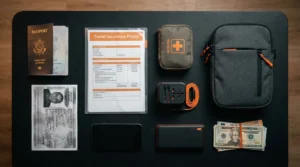
Travel insurance is non-negotiable. Some travelers skip it and never face consequences. Others skip it and one medical incident abroad costs more than every trip they have ever taken combined. The math on this is simple — buy it before departure. One incident without coverage can cost more than every trip you’ve ever taken combined. Buy it before departure, sort it when you book your flights, don’t leave it as something to do later. For official health and safety guidance, check WHO Travel Health Advice.
Personal Safety Basics
Cloud storage backup of every important document — passport, insurance, bookings — accessible from any device anywhere if originals get lost or stolen. General itinerary shared with one trusted person at home, not broadcast to your entire social media following. Anti-theft bag in crowded tourist areas. Official ride-hailing apps over random street taxis. If something feels off about a person or situation, leave — you don’t owe anyone an explanation for your instincts. If a guide situation goes sideways, our What to Do When You Hire the Wrong Tour Guide covers it.
Health on the Road
Hydration is the travel tip that gets ignored most consistently and causes the most problems. Dehydration in hot or humid climates catches you off guard because you often don’t feel thirsty until you’re already significantly behind — drink water before you feel like you need it. Basic medical kit with personal medications, rehydration sachets, pain relief. Vaccinations sorted six to eight weeks before departure not the week before you fly. For comprehensive travel safety preparation, our Travel Safety Tips Guide covers everything from vaccinations to emergency contacts
Emergency Preparedness
Local emergency numbers saved before you need them — they vary significantly between countries and googling during an actual emergency is not how you want to be spending that time. Nearest hospital and your country’s embassy saved offline on your maps app. Small emergency cash reserve kept completely separate from your main wallet — cards get blocked, ATMs run out, readers malfunction. Having cash backup has genuinely saved more trips than people admit.
Getting the Most Out of Any Destination
Finding Local Experiences Beyond the Tourist Trail
Local markets, neighborhood cafes, residential streets, actual conversations with people who live in the place you’re visiting — these are where the real memories come from, not the most photographed landmarks. Ask your accommodation staff where they personally eat and go on their days off, not where they send tourists. Those two things are almost never the same place. Walk into neighborhoods that aren’t on any standard tourist circuit and just see what’s there.
For travel that goes genuinely deeper than surface sightseeing, our Hygge Travel Experiences guide covers a travel philosophy worth reading before any trip. For adventure-focused cultural travel with real educational depth, our Student Trips to South America covers destinations, costs, and how to make these trips genuinely worthwhile.
Transportation Travel Tips
Public transport is almost always the right call — cheaper, often faster during rush hour than a taxi sitting in the same traffic, and it shows you how the city actually functions rather than just the tourist corridor. Rental bikes or e-scooters for shorter distances where the infrastructure works. Official ride-hailing apps when public transport isn’t practical — fixed pricing, journey on record, driver accountability. Learn the local metro or bus system before you land rather than trying to figure it out jet-lagged on day one when everything feels more complicated than it actually is.
Cultural Etiquette and Respect
A few basic phrases in the local language before you arrive genuinely changes the quality of interactions — hello, thank you, and sorry in someone’s native language lands completely differently than the same words in English. Research dress codes for religious sites before visiting rather than showing up wrong and creating an awkward situation that was entirely avoidable. Tipping norms vary dramatically between countries — know them before you sit down anywhere. For European cultural etiquette in detail, check our Irish Travel Tips. For remote cultural contexts, our Local Travel Tips Mongolia and Ecuador and Galapagos Local Travel Tips both cover nuances standard guides skip entirely.
Budgeting and Money Travel Tips

Cost-Saving Strategies That Actually Work
Shoulder season travel — just before or after peak — delivers lower prices, smaller crowds, and often genuinely better weather than the peak period itself. Multi-city routing rather than round trips when you’re visiting several places — usually cheaper and more flexible. Cashback apps alongside travel reward cards so you’re earning back on every booking you’d make anyway. Eating where locals eat rather than in tourist zones — the most reliable single way to cut food costs without cutting quality or authenticity.
Currency Exchange Tips
Never exchange large amounts at airports — the rates are consistently worse than any alternative. Local ATM withdrawals for better rates, travel card like Revolut for card payments without foreign transaction fees. Small amount of local currency kept as emergency backup. Check the rate on XE Currency before any significant exchange so you know what you should be getting rather than just accepting whatever’s offered.
Avoiding Tourist Traps and Scams
Anyone approaching you unsolicited offering tours, guides, or help almost never leads anywhere genuinely useful and occasionally leads somewhere problematic. Research the common local scams for your specific destination before arriving — they tend to be consistent, well-documented in travel forums, and completely avoidable once you know what they look like. Restaurants directly adjacent to major attractions are almost universally overpriced — one or two streets away and both price and food improve immediately.
Travel Technology and Apps
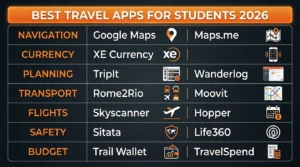
| Category | Recommended Apps |
|---|---|
| Navigation | Google Maps, Maps.me |
| Currency | XE Currency |
| Planning | TripIt, Wanderlog |
| Transport | Rome2Rio, Moovit |
| Flights | Skyscanner, Hopper |
| Safety | Sitata, Life360 |
| Budget | Trail Wallet, TravelSpend |
For a complete breakdown of every travel app worth having, our Best Travel Apps for Students 2026 covers every category in detail.
Solo Travel Tips
Solo travel is a completely different preparation exercise from group travel — the freedom is unmatched but every single decision and responsibility is yours alone. Our Solo Travel Tips 2026 Guide goes deep on everything from destination selection and safety to meeting people and managing a budget entirely alone. For solo travel safety in Caribbean destinations specifically, our Travel Safety Tips Dominican Republic covers what you need to know.
Sustainable and Responsible Travel
Travel has real impact on the places and communities you visit — worth thinking about beyond just your own experience. Eco-friendly accommodation where it’s available — often comparable in price. Reusable bottle and bag to cut plastic consumption. Local businesses over international chains — money stays where you are and the experience is almost always better. Wildlife and natural environments treated with actual respect rather than used as photography props.
What Separates Good Trips from Bad Ones
The pattern that comes up consistently across student travel forums and first-timer accounts is straightforward — poorly prepared trips and well-prepared trips don’t fail or succeed on one dramatic moment. They diverge across dozens of small decisions.
The student who wastes an afternoon figuring out transport they could have researched in ten minutes before leaving. The traveler who overpays consistently because they didn’t know the local alternative existed. The group that ends up somewhere that looked nothing like the reviews because nobody checked anything written recently.
Good travel tips don’t remove the adventure. They remove the friction that gets in the way of actually having one.
Travel Tips FAQ
Q1: What are the most important travel tips for a first-time traveler?
Pack light, carry documents digitally and physically, book in advance, research your destination’s safety and cultural norms, and build genuine flexibility into your plans. Preparation reduces stress — rigid schedules increase it.
Q2: How do I save money while traveling?
Shoulder season travel, mid-week flights, eating where locals eat, public transport over taxis, and tracking every expense in real time rather than guessing at the end of each day.
Q3: How do I stay safe traveling alone?
Share your itinerary with someone at home, stay in central well-reviewed accommodation, use official ride-hailing apps, download offline maps before arriving anywhere new, and trust your instincts without overthinking them.
Q4: What should I pack for international travel?
Passport and document copies, universal travel adapter, personal medications, versatile clothing for multiple climates, comfortable broken-in shoes, power bank, and travel insurance documentation. Everything else is genuinely optional.
Q5: How do I find hidden gems at a destination?
Ask locals where they personally go — accommodation staff, restaurant owners, people you meet on the road. Visit neighborhoods that aren’t on standard tourist circuits. Recent travel forum posts reveal spots no guidebook covers.
Q6: Is travel insurance really necessary?
Yes — without exception. Travel insurance covers medical emergencies, trip cancellations, lost baggage, and evacuation. It’s not expensive relative to what it actually covers and the one time you need it you’ll be extremely glad you have it.
Q7: How do I reduce travel stress?
Sort the logistics before you arrive. Keep your daily schedule flexible. Pack light enough that transit isn’t physically exhausting. Build buffer time into journeys where delays are likely. Accept that some things will go wrong — having a plan for when they do removes most of the stress from them actually happening.

Awamar Chheena is the founder of Travel Tips for Students. He writes practical guides to help students find travel deals, student discounts, and budget-friendly tips. His goal is to make travel more affordable for students around the world.